Long-flowering, alstroemerias or Peruvian lilies are tireless summer performers. But these handsome perennial plants from Latin America lack a little hardiness and may be lost over winter in some regions. Propagating them in spring and planting them in different parts of the garden makes it easy to form new clumps. Here’s how to proceed.
Why propagate alstroemerias?
As with many perennial plants, division both renews clumps that have become too dense and compact, flowering less in their centre, and produces new plants to install elsewhere in the garden or to give away.
When to propagate alstroemerias?
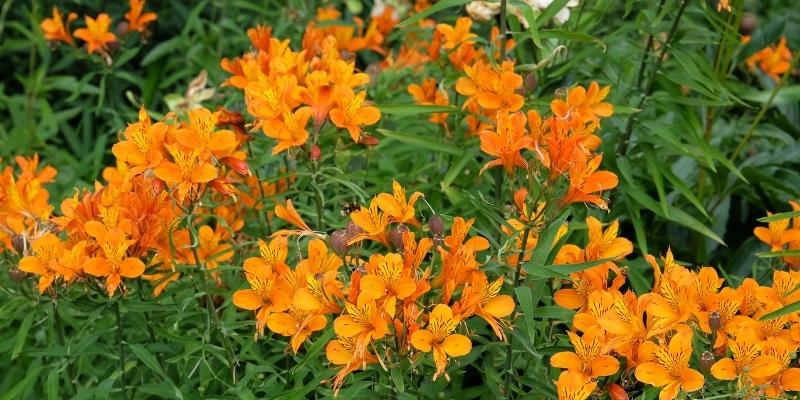
Whether the species type with yellow‑orange colouring, the Alstroemeria aurantiaca or the many hybrids, alstroemerias are best divided in spring, between March and early April, as growth starts, or in mild climates (USDA zone 8 and above) immediately after flowering in autumn. They can also be sown (see below, though this method is more uncertain) from March.
Only work on mature plants, at least 3 years old. Frequency depends on vigour, but generally divide every five years or so, no more often, to avoid weakening the plants.
These are often plants whose clump centre becomes less vigorous, or stunted specimens. Conversely, divide alstroemerias that have taken up too much space and are encroaching on neighbouring plants. Potted Peruvian lilies should also be divided if they become too crowded.
How to propagate Alstroemeria?
Two methods are possible, with clump division remaining the easiest and most commonly used as it gives a higher success rate.
Propagation by clump division
This involves splitting an ageing clump by a few years to rejuvenate it. The challenge is not to damage the fleshy, tuberised roots of this plant. This method suits hybrid Peruvian lilies, preserving identical flowering and foliage to the parent plant.
- Using a garden fork or a sharp trowel, lift and divide the clump into two or three sections;
- Take peripheral offsets that include roots and clearly visible young shoots: sections should be about 20 cm deep;
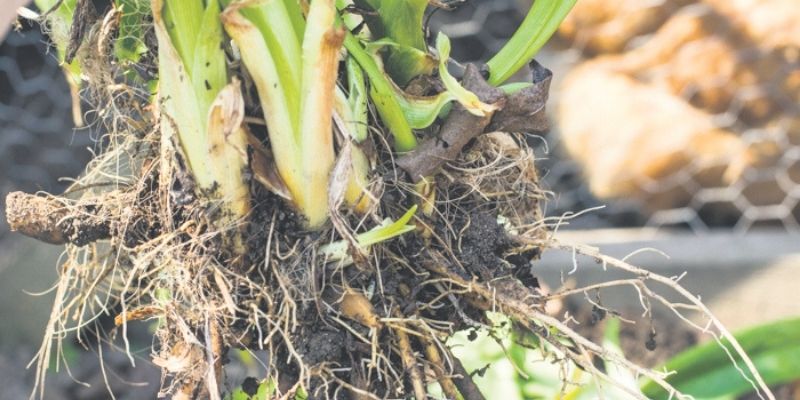
- Gently separate with a clean knife into several pieces, each showing healthy white roots and visible shoot initials; remove any black, dead roots;
- Replant Alstroemeria offsets immediately to prevent root desiccation, keeping the rootball, either in a pot or at their future garden location after preparing the planting hole (in heavy soil, perfect drainage is essential: avoid hollows where water collects);
- Fill around with potting compost mixed with a little garden compost if dividing in spring;
- Water thoroughly but avoid waterlogging the plant;
- Mulch with ferns or dried grass clippings to conserve moisture and deter slugs and snails.
My tip: you don’t need to move the whole clump, especially when it’s large. Take only the outer, most vigorous parts. For a potted alstroemeria, lift from the pot and cut off a vigorous lateral piece with roots.
Propagation by sowing
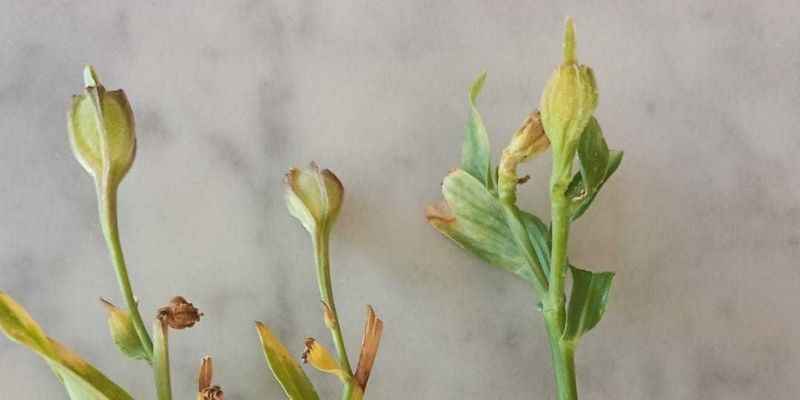
This method is much more uncertain and aimed at experienced gardeners. It works well with botanical Peruvian lilies, such as Alstroemeria aurantiaca from Chile and Alstroemeria psittacina from Brazil. However, it is not always easy to find seeds or to harvest fully ripe ones. You can use seeds from horticultural varieties, but there is no guarantee of recovering the original flower colour or characteristics.
- Collect seeds from the capsules in autumn: if seeds are fully black, soak for 24 hours; if not (a sign of early harvest), place in the refrigerator for three weeks to achieve stratification before sowing in March;
- Sow seeds no more than 1 cm deep in clean pots filled with slightly moist seed compost, or in a heated mini-propagator;
- Place pots/mini-propagator in bright, indirect light in a greenhouse or indoors;
- Keep compost moist until germination, which takes 2–3 weeks;
- As soon as leaves appear, pot on seedlings into larger pots;
- Wait until the following spring to plant out in the ground or in containers;
- Flowers will appear the following year.
Expect two to three years from sowing to flowering.

































Comments