





























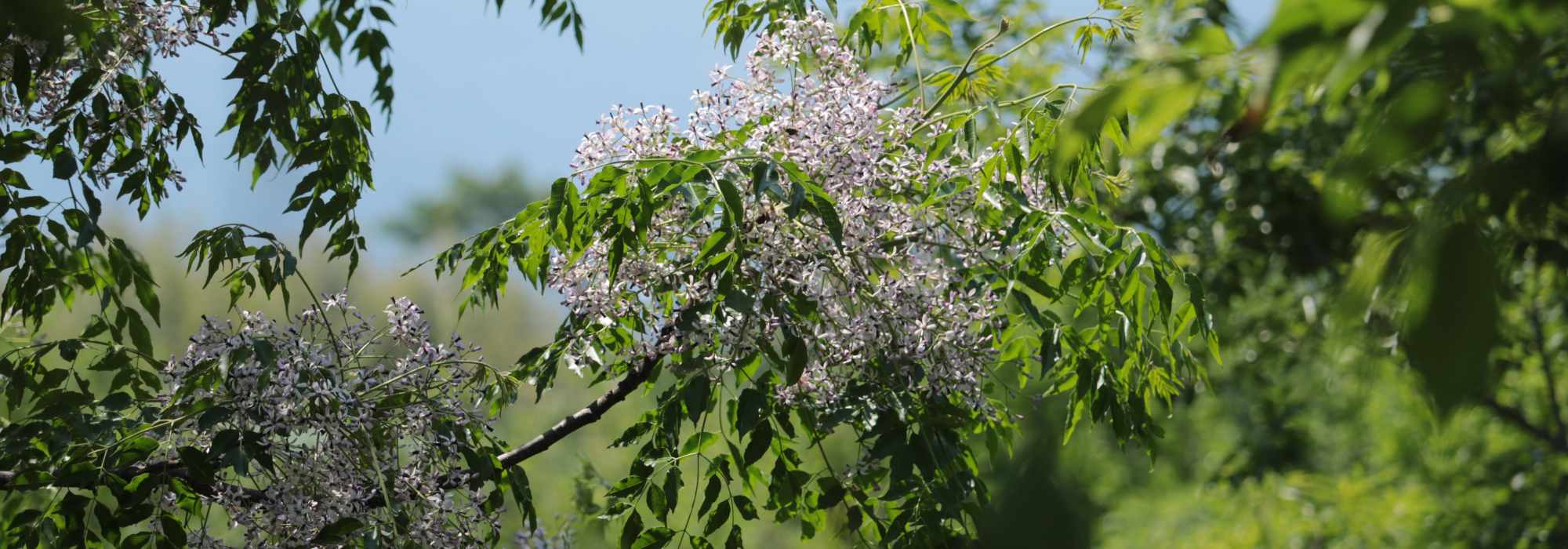
Melia - Margousier: planting and growing
Contents
Neem tree in a nutshell
- Melia azedarach, often called chinaberry or Persian lilac, is native to Asia and northern Australia. It is well suited to temperate to tropical regions.
- These are deciduous trees, characterised by pinnate or bipinnate leaves, providing a delicate, airy texture.
- Chinaberry produces clusters of small fragrant flowers, usually lilac or purple in colour, which appear in spring.
- After flowering, it produces spherical fruits resembling small yellow or green drupes, containing seeds used in various traditional applications.
- Melia azedarach is prized for its ornamental qualities, as well as its medicinal and insecticidal properties.
Word from our expert
Melia azedarach, more commonly called chinaberry or Persian lilac, is sure to pique the curiosity of any self-respecting gardener. You guessed it, the chinaberry is not just an ornamental tree; it’s a true botanical treasure with a touch of eccentricity.
Native to Asia and northern Australia, Melia azedarach has travelled across continents to find its way into our gardens. Why so popular? Perhaps thanks to its delicately pinnate leaves, which dance in the breeze, offering a captivating natural display. But wait, that’s not all!
In spring, the chinaberry becomes a perfumed stage. Its flowers, small lilac or purple stars, appear in clusters to provide an olfactory feast. A true floral show! But don’t become too intoxicated, because after flowering, the fruits appear. These small spheres, yellow or green, may seem harmless, but they harbour secrets. Indeed, they have been used for centuries for their medicinal and insecticidal properties.
The chinaberry is not very demanding, but it likes attention. Well-drained soil and a sunny position, and it will reward you with rapid, vigorous growth. Be careful, however, as it can become somewhat invasive if not monitored. Quite a character, this chinaberry!
Beyond its beauty and virtues, study of Melia azedarach is full of anecdotes. Did you know that in Turkey it is called the “rosary tree” because its seeds were used to make rosaries? Or that in some cultures it is considered a protective tree, warding off evil spirits?
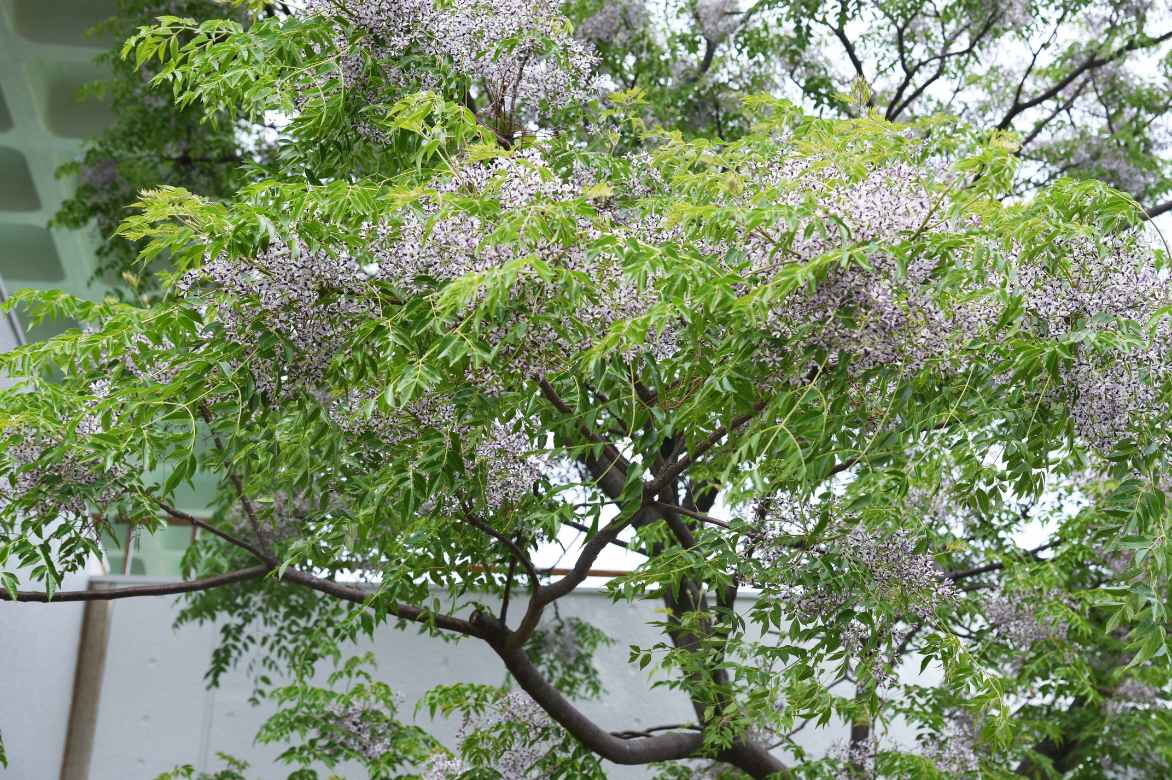
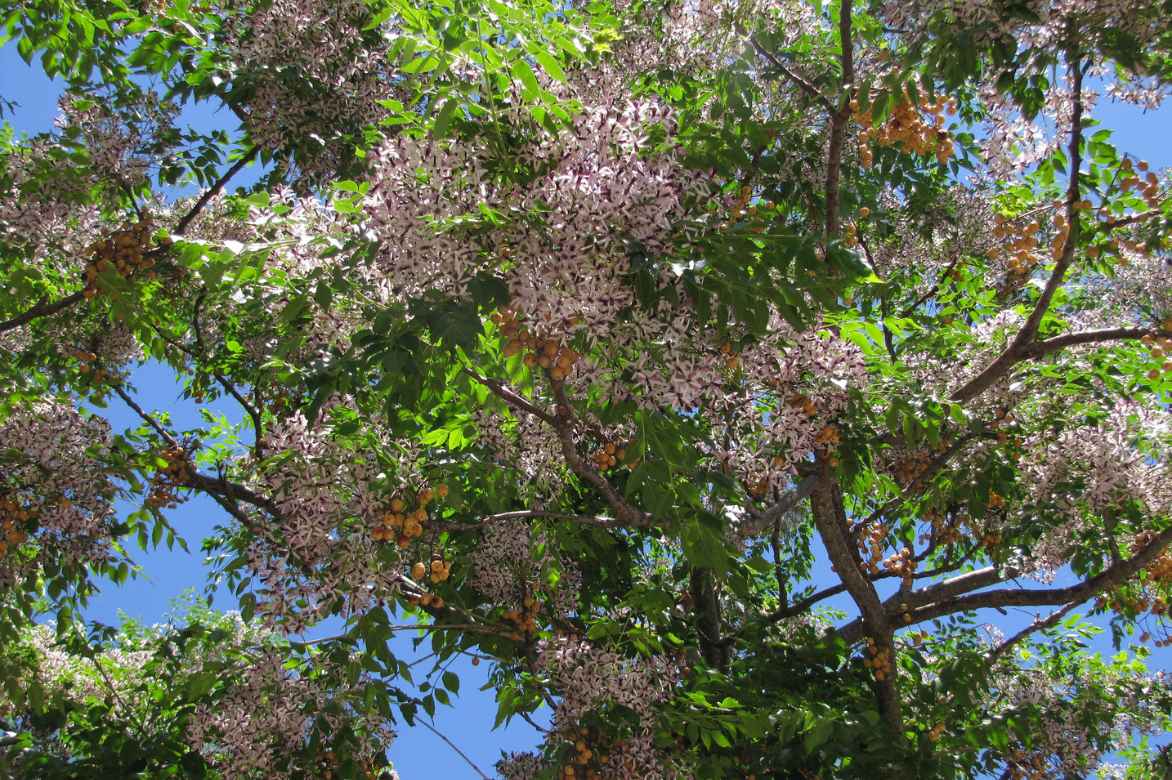
Spring flowering of Melia azedarach

Botany and description
Botanical data
- Latin name Melia sp.
- Family Meliaceae
- Common name Chinaberry, Bead-tree, Neem, Persian lilac
- Flowering May to July
- Height 10 m
- Sun exposure full sun or partial shade
- Soil type fresh to dry, but well drained
- Hardiness -9°C
The botanical genus Melia, known for its best-known species, Melia azedarach (chinaberry or Persian lilac), belongs to the family Meliaceae. The genus Melia comprises five species: Melia dubia (syn. Melia composita), Melia floribunda, Melia candoleii, Melia parasitica and Melia azedarach.
Species of the genus Melia are mainly native to the tropical and subtropical regions of Asia and Australia. They are adapted to varied climates, ranging from warm temperate zones to tropical regions. Melia species occur naturally in diverse habitats. They generally prefer well-drained soils and can be found in forests, wooded areas, and sometimes in urban settings where they are planted as ornamental trees. Their adaptability allows them to thrive in a variety of environmental conditions.
Chinaberry, or Melia azedarach, is a tree that captures attention at first sight. Upright with natural elegance, it displays a rounded, sometimes asymmetrical silhouette that can reach up to 15 m in height. Its presence in a garden or urban landscape is all the more striking thanks to its stately habit and well-defined tiers.
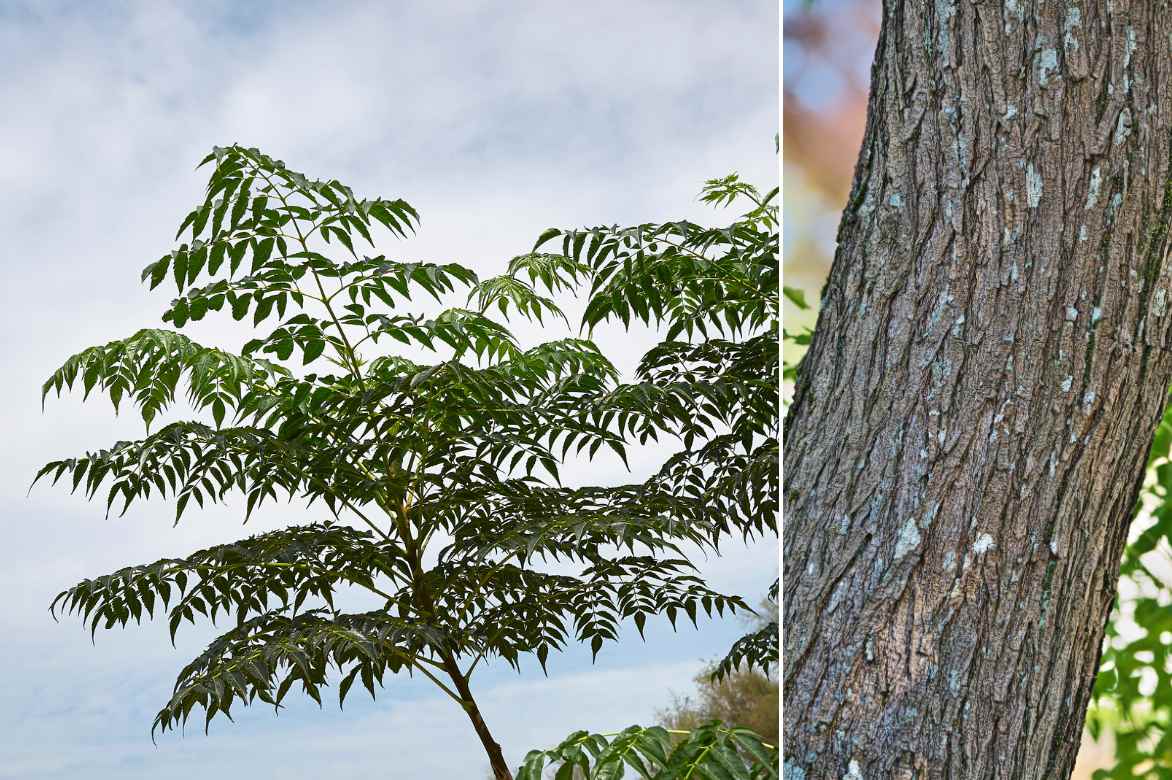
The chinaberry’s bark, grey-brown, tells the story of its growth over the years, cracking slightly with age. The foliage is deciduous and is a spectacle in its own right. Its pinnate leaves, delicate and light, create a play of shadow and light, particularly soothing on sunny days. Leaf colour is green in season, turning yellow in autumn.
In spring, chinaberry is adorned with clusters of small lilac or purple flowers, giving off a subtle, pleasant fragrance. Each flower is small, with five petals. The flower clusters can be quite large, giving the tree a very floriferous and spectacular appearance in spring. These flowers not only please the eye but also attract bees and butterflies.
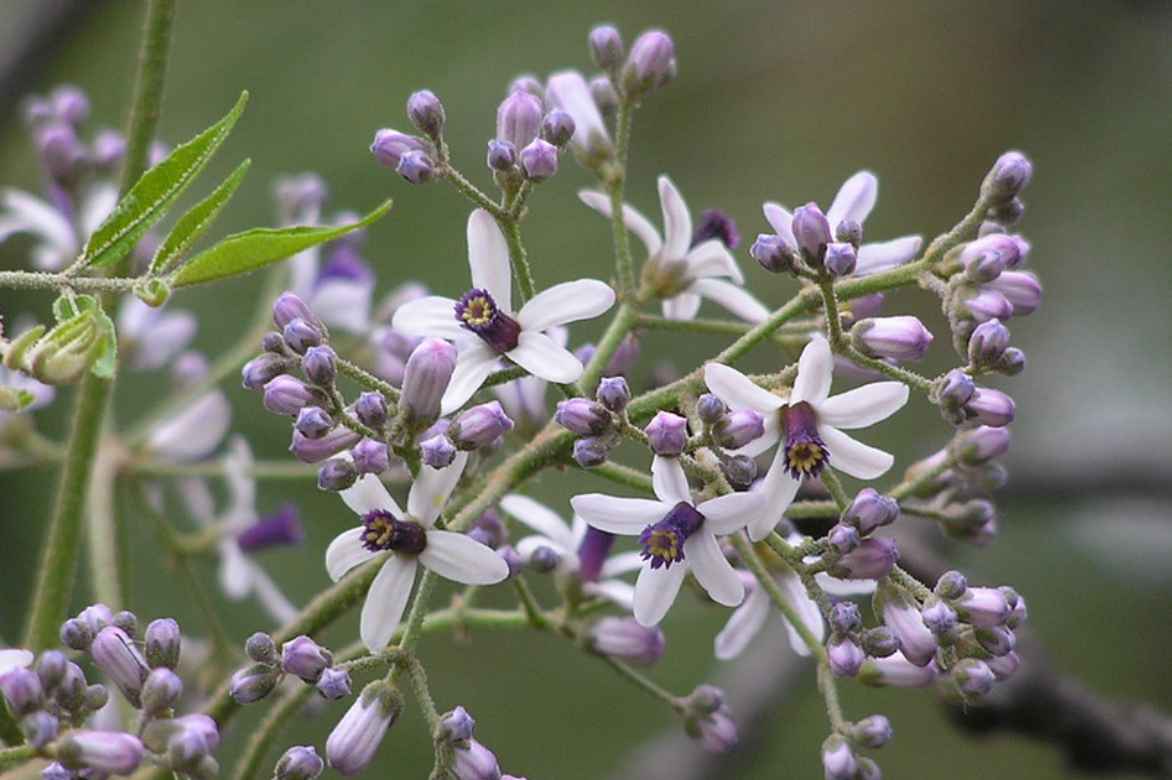
An exquisite bloom (© HQ)
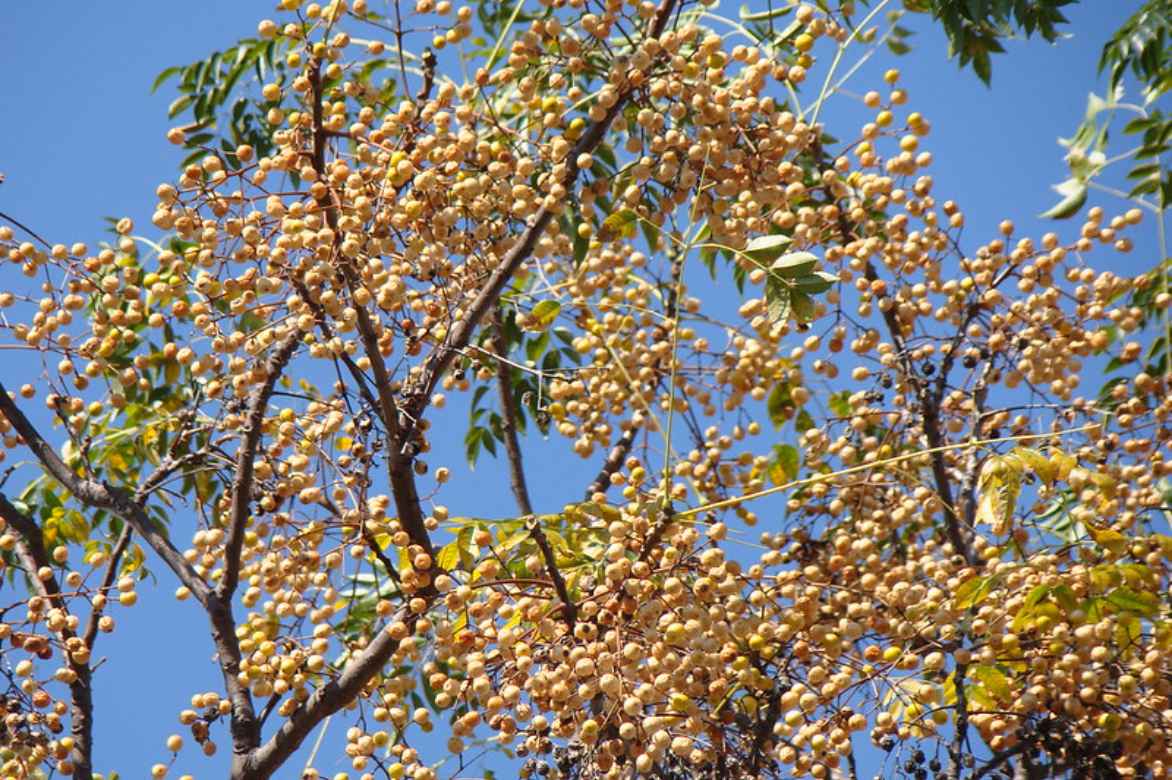
Fruiting follows flowering, producing spherical drupes that are first green then turn yellow as they mature. These fruits, though decorative, should be handled with care as they are toxic to humans. Chinaberry reaches sexual maturity fairly quickly, often just a few years after planting.
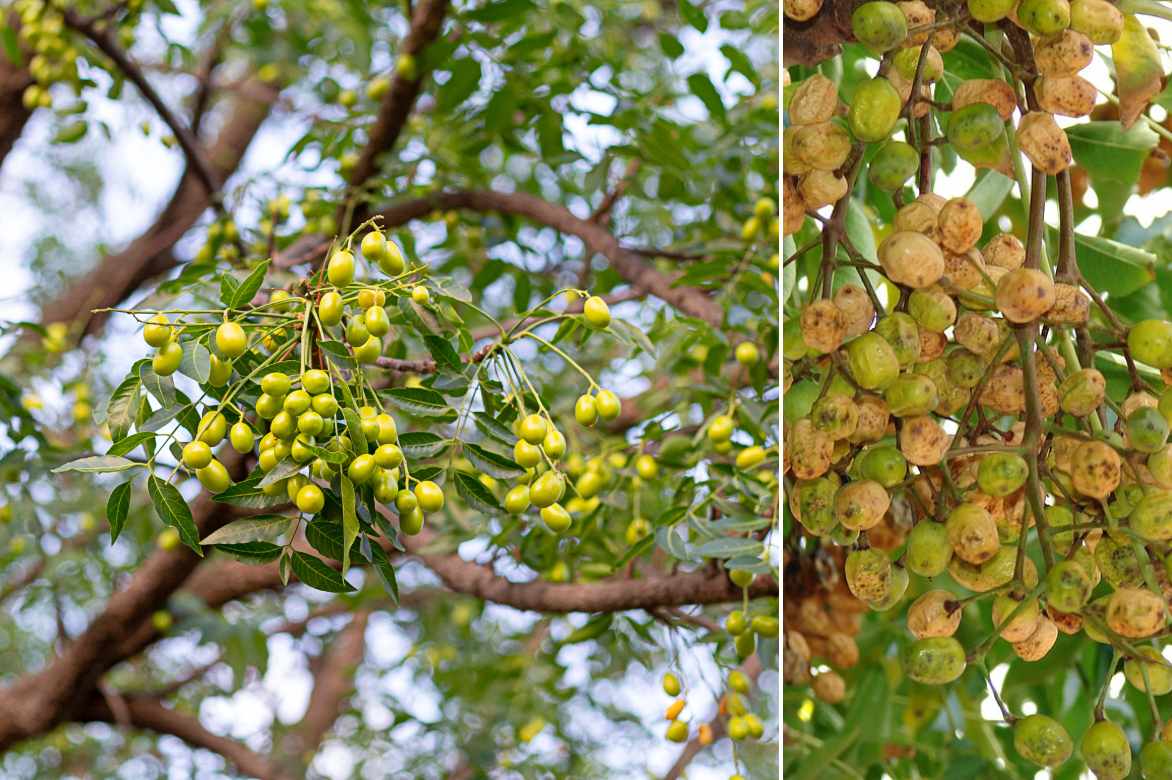
Chinaberry fruits. Right photo ©Wikimedia Commons
Inside each fruit, seeds await their turn to continue this tree’s life cycle. These seeds are generally brown, hard and smooth, modest in size, suited to dispersal by birds and other animals that consume the fruit.
Chinaberry is not only an ornamental tree; it is also used in various traditional practices, notably for its medicinal and insecticidal properties.
Read also
How to germinate tree seeds?Some varieties
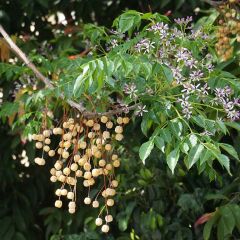
Melia azedarach
- Flowering time June to August
- Height at maturity 9 m
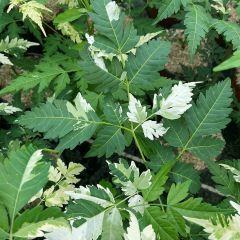
Melia azedarach Jade Snowflake
- Flowering time June to August
- Height at maturity 9 m
Planting neem
Where to plant?
Chinaberry prefers sunny positions. A site receiving full sun for most of the day is ideal for its growth and flowering. However, it can thrive in partial shade, even in shade for variegated-leaved cultivars, but in that case it will be less floriferous.
It adapts to a variety of soil types, but prefers well-drained soils. Avoid areas where water tends to stagnate.
Choose a spot sheltered from strong winds, as its wood is fairly brittle.
Although hardy and adaptable, chinaberry performs best in temperate to tropical climates. It can withstand short periods of frost, but extremely low temperatures can damage the tree. It is only hardy down to -9°C and in well-drained soil.
Given its potential size and spreading habit, it is important to plant chinaberry in a space large enough to accommodate its growth. In addition, as chinaberry fruits are toxic to people and some pets, it is advisable to plant this tree some distance from children’s play areas or zones frequented by pets.
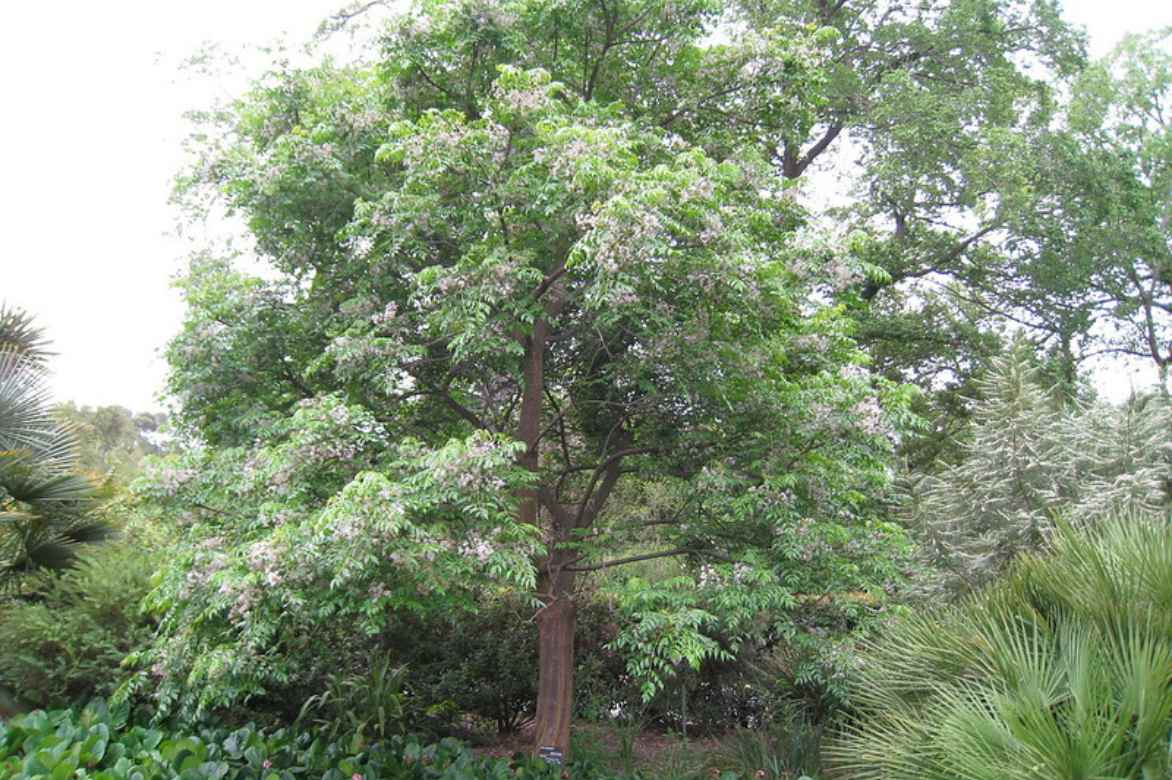
Melia Azedarach ( ©Wendy Cutler)
When to plant?
In temperate regions, planting is best in early spring (April), as soon as risk of frost has passed. This allows the tree to establish during the growing season before its first winter. In milder climates, plant in October.
How to plant?
- Dig the hole : Dig a hole twice as wide as the rootball and slightly deeper. This allows roots to spread easily into the surrounding soil.
- Position the tree : Remove the tree from its container and gently loosen the roots if they are wrapped. Place the tree in the hole so that the base of the trunk, the collar, is level with the surrounding soil.
- Backfill : Backfill the hole with the original soil, firming lightly to remove air pockets. Take care not to bury the collar.
- Watering : Water the tree thoroughly after planting to establish good contact between roots and soil. This will also help reduce transplant shock.
- Mulching : Apply a layer of mulch around the base of the tree to conserve moisture, suppress weeds and protect the roots.
- Aftercare : Water the tree regularly during the first growing seasons, especially in dry periods. A regular supply of water is crucial for development of a healthy root system.
Read also
7 rare treesCaring for Melia
Melia azedarach, or chinaberry, is a relatively easy tree to care for.
When it comes to watering, it needs particular attention while young to ensure it becomes well established. Once established, Melia tolerates drought well, but regular watering during hot spells or prolonged dry periods helps maintain vigour.
Regarding pruning, Melia can be pruned to control its shape and size or to remove damaged or poorly placed branches. Pruning is best done in late winter or early spring, before new growth begins. However, excessive pruning is unnecessary, as the tree has a naturally attractive habit.
Mulching around the base of the tree helps retain soil moisture, reduce weed competition, and provide additional nutrients as it breaks down.
Melia azedarach (© Luc Coekaerts)
Parasitic organisms and diseases
Melia, although generally robust and resistant to many pests and diseases, is not entirely free from certain problems. Among the most common are insect attacks such as aphids, which can cluster on young shoots and leaves, sucking sap and weakening the tree. These aphid infestations often leave a sticky residue, honeydew, which can encourage development of sooty mould, a blackish fungus that forms on leaves.
In addition, Margousier can sometimes be affected by fungal diseases, particularly when conditions are damp or if air circulation around the tree is poor. These diseases often appear as spots or discolouration on leaves. No need to worry, however; these issues are relatively rare and seldom require intervention.
Autumn fruiting (© Mauro Halpern)
Propagating Melia
Sowing seeds is the most natural and common method. Seeds, once extracted from their fruits, should be planted shortly after harvest for better germination. Germination can be facilitated by soaking seeds in water overnight before sowing. Planting is usually done in spring in a well-drained growing medium and in moderate temperatures.
Besides sowing, neem tree can also be multiplied by propagation by cuttings, although this method is less common. Propagation by cuttings involves taking young shoots or stems from the current year’s growth, preferably in early summer, and planting them in a mix of compost and sand to encourage rooting. Rooting is favoured by a warm, humid environment, and cuttings should be monitored carefully to ensure success.
Comment associer un Melia azedarach ? Melia azedarach is a fast‑growing, semi‑deciduous tree that works well as a specimen or focal point. When choosing companions, aim for plants that share its preference for full sun, good drainage and moderate drought tolerance, and take into account messiness (fallen fruits/leaf litter) and toxicity. Ideal companions - Drought‑tolerant perennials and herbs: Lavandula, Salvia (e.g. S. nemorosa), Nepeta, Achillea, Sedum — they tolerate sun and poor to moderately fertile soils. - Mediterranean shrubs: Cistus, rosemary (Rosmarinus officinalis), lavender‑type shrubby plants for low, evergreen structure beneath tree canopy. - Ornamental grasses: Pennisetum, Stipa or Miscanthus for movement and contrast with the tree’s fine foliage. - Summer perennials for colour: Echinacea, Rudbeckia, Verbena bonariensis — tall, airy plants that won’t be shaded out by the tree. - Bulbs in spring: Narcissus and Allium planted in grass or under the tree give early colour before canopy fills out. Planting and design tips - Position in full sun with well‑drained soil; avoid waterlogged sites. - Create a wide mulch‑ring under the canopy and plant at the edge of the drip line rather than right against the trunk to reduce root competition and stem rot risk. - Use groups of lower plants rather than single specimens for greater visual impact and to tolerate the tree’s litter. - Combine textural contrasts (fine foliage of Melia with coarse grasses or bold flower heads) and repeat one or two strong colours for cohesion. Maintenance and precautions - Water regularly while young; afterwards the tree is fairly drought tolerant. - Prune lightly after flowering to maintain shape and remove crossing branches. Heavy pruning can stimulate vigorous suckering. - Remove fallen berries promptly: fruits are toxic to humans and many animals and can create seedlings where unwanted. - Check local regulations: in some regions Melia can naturalise or be classed as invasive. - Watch for occasional pests (scale, borers) and avoid planting in extremely exposed, frost‑prone sites if you are in a marginal climate. Quick checklist - Light: full sun. - Soil: well drained, tolerates poor soils. - Underplant with: drought‑tolerant perennials, mediterranean shrubs, ornamental grasses. - Caution: toxic fruit, potential to naturalise, messy litter. If you tell me your climate/soil and whether you prefer a formal or natural planting style, I can suggest a tailored plant list.
Consider creating a harmonious understorey beneath Melia azedarach’s canopy, where hostas, with their lush, varied leaves, can thrive in light shade. Ferns, such as ostrich fern or male fern, offer delicate green foliage that contrasts nicely with Melia azedarach’s more robust structure.
To complement Melia azedarach’s spring flowering, consider shrubs such as azaleas or rhododendrons, which bring an explosion of colour at the same time. Their vibrant blooms and evergreen foliage add depth and texture beneath Melia azedarach.
Near base of tree, groundcovers such as lesser periwinkle or common ivy can spread, creating a lush green carpet that offsets Melia azedarach’s height. These plants are hardy and low-maintenance, pairing well with Melia azedarach’s easy-going nature.
For continuous seasonal interest, incorporate perennials that flower in summer or autumn, such as daylilies or asters, to maintain visual appeal of garden even after Melia azedarach finishes flowering.
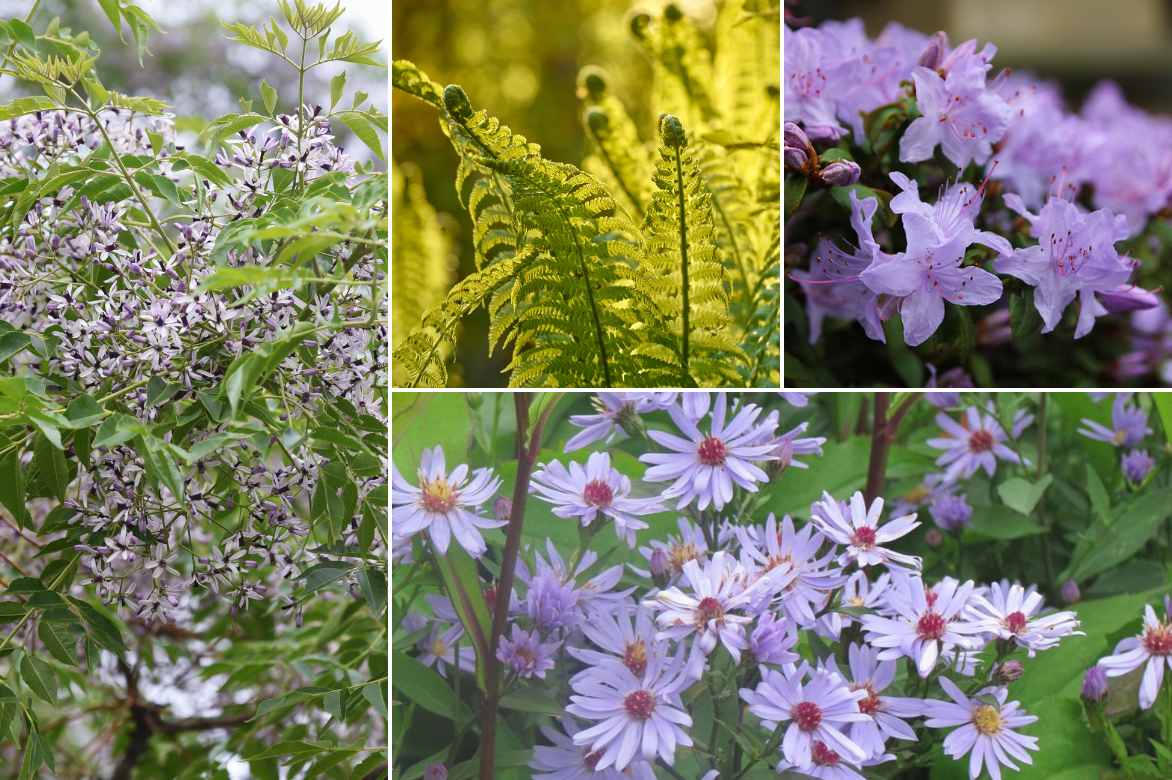
Melia azedarach, ostrich fern, Rhododendron ‘Blue Tit’ flowering simultaneously, and Asters cordifolius ‘Little Carlow’ that will bloom in late summer.
Anecdotes
- Rosary tree : In Turkey and other regions, neem is nicknamed “rosary tree” because its hard, smooth seeds have traditionally been used to make rosaries.
- Music and medicine : In some cultures, neem wood is used to make musical instruments, while in others it is valued for its medicinal properties. Its leaves, fruits and bark have been used in traditional medicine (in China and in Australia) to treat various ailments.
- Symbol of resilience : Neem is often planted in urban areas for its ability to withstand pollution. Its endurance in challenging conditions makes it a symbol of resilience and a popular choice for urban landscaping.
- Natural insecticide : Neem’s fruits and leaves are known for their natural insecticidal properties. They have been used in many cultures to protect crops and dwellings from harmful insects, demonstrating the tree’s importance in traditional agricultural practices.
Frequently asked questions
-
Is neem suitable for all garden types, and can it be grown in a pot?
Its size, which can reach 10 to 15 metres in height, makes it an ideal choice for large gardens or public spaces where it can flourish without constraint. However, its size and extensive root system make it less suitable for small gardens or confined spaces.
As for growing it in a pot, although technically possible, this presents challenges. A neem tree needs space for its roots to develop, and a pot would restrict its growth. In addition, a potted tree requires more regular maintenance, particularly in terms of watering and feeding. If you want to grow a neem tree in a pot, it is best to choose a young specimen and provide a large container, while being aware that its growth will be limited and it will probably never reach its full size.
-
Are there any particular precautions to take because of the toxicity of neem fruits?
If you have children or pets, it is crucial to supervise them around the tree to prevent them from eating the fruits or seeds. Explain to children that the fruits are not edible and can be dangerous.
Collect fallen fruits regularly to reduce risk of accidental ingestion by children or pets. Obviously, when planting a Margousier, choose a location away from children's play areas and areas frequented by pets.
-
What is lifespan of a margousier, and how does it change over the seasons?
A neem tree's lifespan can be quite long, often several decades, and in some cases it can live up to a century or more, especially when planted in ideal conditions and given appropriate care. The way this tree develops through the seasons is also notable.
In spring, neem enters a period of active growth. This is when its distinctive flowers, usually lilac or purple, appear, forming fragrant clusters that attract various pollinators.
In summer, after flowering, the fruits begin to form. These are small drupes that ripen gradually, turning from green to yellow or brown. These drupes add visual interest to the tree and attract wildlife, particularly birds.
In autumn, neem leaves begin to change colour, offering a display of yellow and golden hues before falling. The tree thus prepares for winter by entering a period of dormancy.
In winter, neem loses most, if not all, of its leaves, revealing its branch architecture. Although it appears inactive during this period, the tree concentrates its energy on root development and prepares for the next spring's growth cycle.
Over the years, neem continues to grow in size and maturity, offering a majestic habit and ongoing seasonal interest in the landscape. Its longevity and seasonal beauty make it a popular choice for parks, public gardens and large residential grounds.
-
Can wood or other parts of the neem tree be used for domestic or craft use?
Melia azedarach wood is valued for robustness and durability. It is often used to make furniture, structural timber and decorative objects. Its fine texture and good finishing qualities make chinaberry wood suitable for detailed joinery. In some cultures, chinaberry wood is used to make musical instruments because of its good acoustic resonance. Chinaberry seeds, particularly hard and smooth, are used to make beads for rosaries, jewellery and other handicrafts. They are prized for their natural appearance and durability.
Leaf and fruit extracts of chinaberry have insecticidal properties and can be used to prepare natural insect repellents.
- Subscribe!
- Contents
Comments