
Hydrangea serrata Frozen Smoothie ® - Mountain Hydrangea
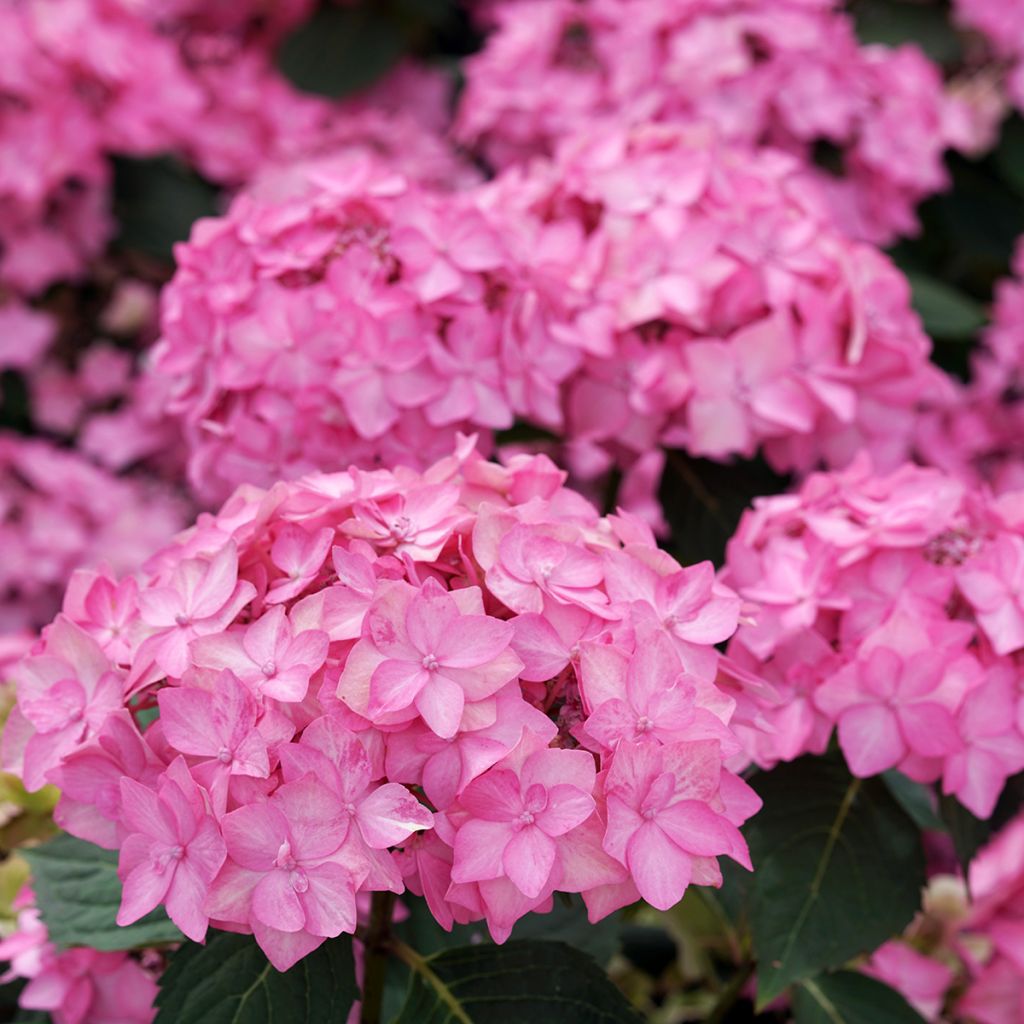
Hydrangea serrata Frozen Smoothie ® - Mountain Hydrangea
Hydrangea serrata Frozen Smoothie ® - Mountain Hydrangea
Hydrangea serrata (Flair & Flavours® series) ‘SMNHSI’ Frozen Smoothie ®
Mountain Hydrangea, Tea of Heaven
Back-to-school special offer!
Get €10 off for every €50 you spend! And get up to €40 off on a single order.
How does it work?
1. Shop your favourites
Add your favourite plants to your basket. For every €50 you spend (excluding delivery charges, store credit and the plastic-free option), you’ll receive a €10 voucher.
€50 spent = €10 voucher
€100 spent = €20 voucher
€150 spent = €30 voucher
€200 spent = €40 voucher
2. Place your order
Once your basket reaches one of the spending thresholds, place your order. You can even choose your delivery date!
3. Receive your voucher
As soon as your order has been shipped, you’ll receive an email containing your personal voucher code and its value.
4. Use it on your next order
Your voucher is valid for 90 days from the date you receive it. It can be used once only, on a new order worth at least the value of the voucher, excluding delivery charges.
Please note: Vouchers can be combined with other offers, but cannot be split or refunded.
Why not try an alternative variety in stock?
View all →
Available in 1 sizes
Available in 1 sizes

Available in 1 sizes

Available in 1 sizes

Available in 2 sizes

Available in 1 sizes

Available in 2 sizes
Available in 2 sizes

Available in 1 sizes
This plant carries a 24 months recovery warranty
More information
We guarantee the quality of our plants for a full growing cycle, and will replace at our expense any plant that fails to recover under normal climatic and planting conditions.
Does this plant fit my garden?
Set up your Plantfit profile →
Description
The Hydrangea serrata Frozen Smoothie is a hydrangea from the Flair & Flavours® series, distinguished by its repeat flowering that occurs along the entire length of the stems. Its inflorescences, in flat corymbs, will be pink in neutral to alkaline soil or lavender blue in acidic soil. They renew themselves until the frosts, while the foliage takes on a red hue at the end of the season. It is a small, very compact bush, suitable for lightly shaded borders as well as container cultivation.
Belonging to the Hydrangeaceae family, this cultivar referenced under the code 'SMNHSI' was selected in 2014 by Tim Wood (Spring Meadow Nursery, Michigan); it originates from a sowing of 'Mak20' (Tuff Stuff range), which explains its good hardiness and its ability to flower along the entire stem; in North America, it is classified as a hybrid of Hydrangea macrophylla and H. serrata and bears the commercial name Let’s Dance Can Do!®.
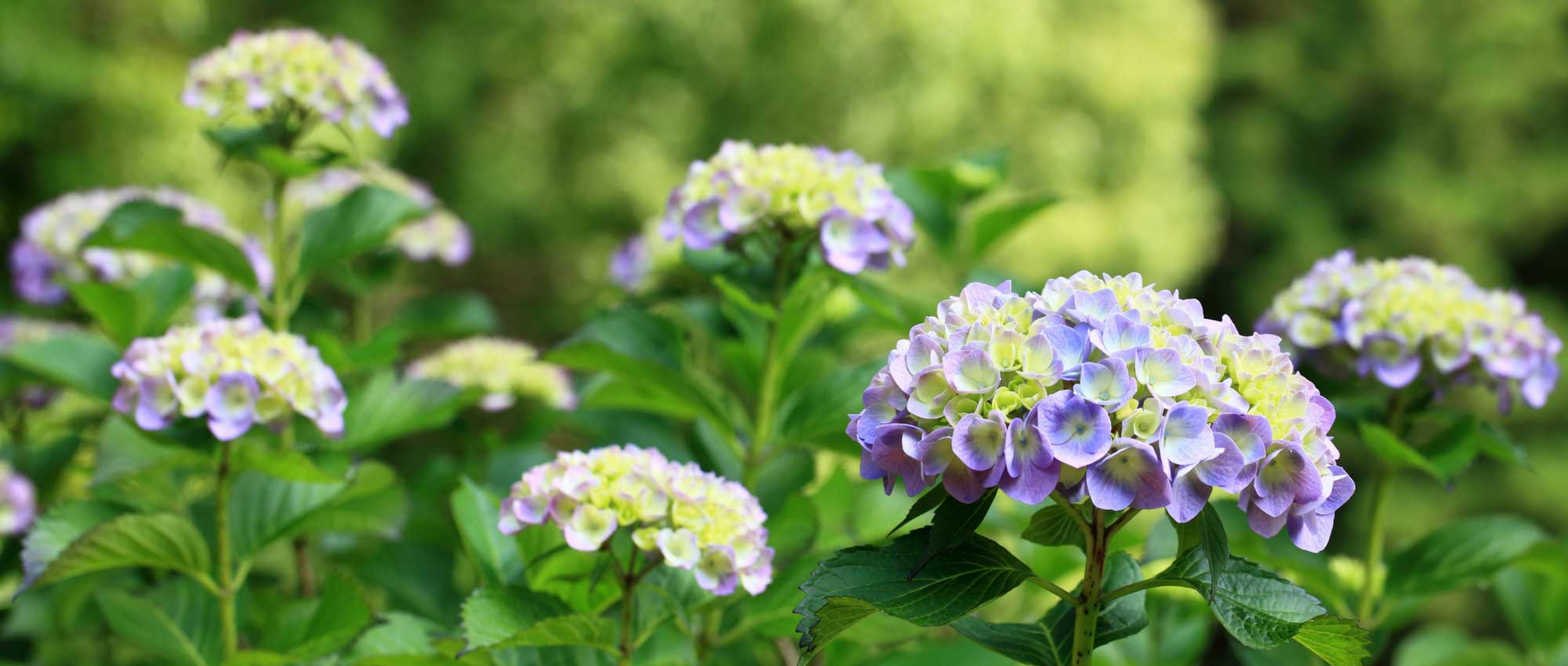
It is a bush with a rounded, bushy habit, forming a cushion 70–80 cm in all directions. Its upright, ramified stems are smooth, greenish-brown, then become reddish-brown with age. The leaves, ovate to elliptical, with a finely dentate margin, 6–12 cm long, of a medium green, turn purplish-red in autumn; they are deciduous, absent in winter. The inflorescences are large corymbs, composed of small central fertile florets surrounded by numerous sterile florets. These inflorescences bloom both at the tip and along the stems; flowering extends from June to September-October, often until the first frosts. The plant is hardy to approximately −25 °C.
A small-sized bush, this Frozen Smoothie Hydrangea is not strictly a heather soil plant, but it likes humus-bearing, rich, cool, and well-drained soils. It is a very good variety for cultivation in pots or containers, on a balcony or terrace sheltered from the afternoon sun. In the garden, plant it in a lightly shaded border, at the edge of trees, in the company of plants sharing the same needs. To extend the flowering season, consider Japanese azaleas for early spring, dwarf rhododendrons for the month of May, and the Glory Bower Clerodendrum trichotomum Variegatum for autumn.
The botanical species Hydrangea serrata is native to the mountains of Japan and Korea where it grows in cool forest edges and undergrowth; the epithet "serrata" refers to the finely dentate margin of the leaves, while "Hydrangea" comes from the Greek hydor (water) and aggeion (vessel) in reference to the capsules. This species is also called "mountain tea"; its leaves, rich in phyllodulcin, are used locally to prepare a traditional herbal tea (amacha in Japan).

Hydrangea serrata Frozen Smoothie ® - Mountain Hydrangea in pictures
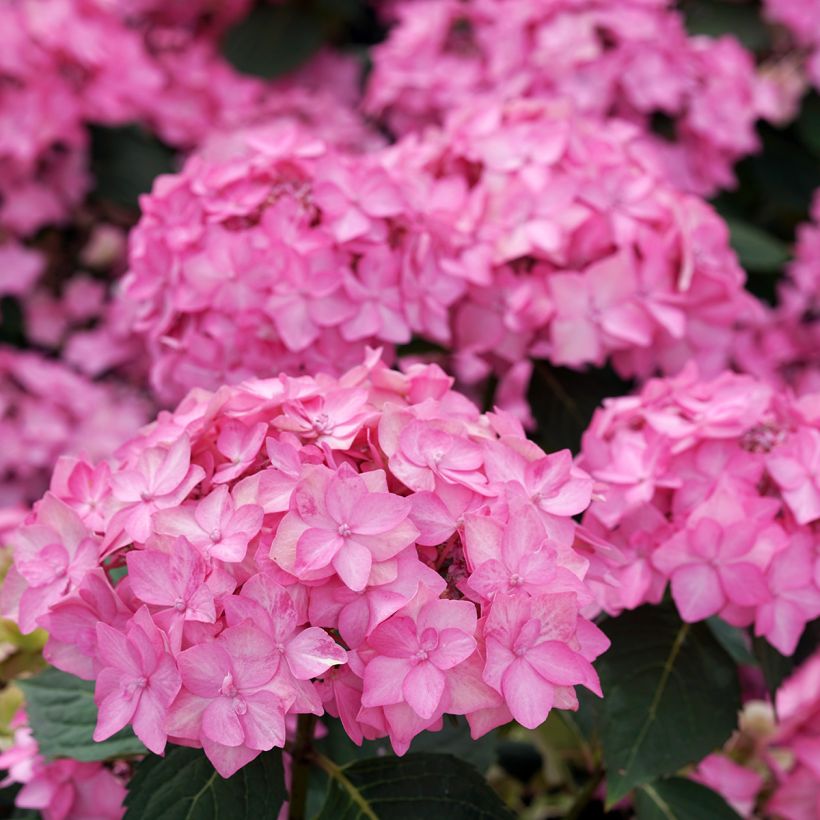
Plant habit
Flowering
Foliage
Botanical data
Hydrangea
serrata
‘SMNHSI’ Frozen Smoothie ®
Hydrangeaeceae
Mountain Hydrangea, Tea of Heaven
Hydrangea serrata 'SMNHS', Hydrangea Frozen Smoothie ® (FLAIR & FLAVOURS series ), Hydrangea Let’s Dance Can Do!®
Cultivar or hybrid
Planting and care
Plant the Frozen Smoothie Hydrangea in spring or early autumn, preferably in a lightly shaded position, for example against an east-facing wall, or even north-facing. In very cold regions, it may be prudent to protect its stump with a thick mulch. Shelter it from cold, drying winds. It does not necessarily require heather soil, but appreciates a deep, cool, yet well-drained, fairly fertile soil. In poor soil, enrich with a good base fertiliser before planting, and mix the existing soil with a substrate containing a portion of compost...
If the soil is dry at the foot of the wall, position the root ball at least 30-40 cm from the base of the wall, and incorporate plenty of well-rotted compost to better retain moisture in the soil. After planting, be mindful of slugs, which are quite fond of young leaves. Very hardy, it does not fear being planted in cold regions. Water regularly during hot periods to prevent the foliage from wilting during dry spells.
This variety of Hydrangea is also particularly well-suited to cultivation in a pot or decorative container due to its fairly compact dimensions. In this case, ensure you choose a compost for ericaceous plants, and water regularly to keep this substrate moist. In the event of a cold winter, shelter the pot in the corner of a wall, or even in a garage in case of severe frost, as container cultivation exposes the roots more to frost.
Planting period
Intended location
Care
Planting & care advice







This item has not been reviewed yet - be the first to leave a review about it.
Haven't found what you were looking for?
Hardiness is the lowest winter temperature a plant can endure without suffering serious damage or even dying. However, hardiness is affected by location (a sheltered area, such as a patio), protection (winter cover) and soil type (hardiness is improved by well-drained soil).
In temperate climates, pruning of spring-flowering shrubs (forsythia, spireas, etc.) should be done just after flowering.
Pruning of summer-flowering shrubs (Indian Lilac, Perovskia, etc.) can be done in winter or spring.
In cold regions as well as with frost-sensitive plants, avoid pruning too early when severe frosts may still occur.
The sowing periods indicated on our website apply to countries and regions within USDA Zone 8 (France, UK, Ireland, Netherlands).
In colder areas (Scandinavia, Poland, Austria...), delay any outdoor sowing by 3-4 weeks, or sow under glass.
In warmer climes (Italy, Spain, Greece, etc.), bring outdoor sowing forward by a few weeks.
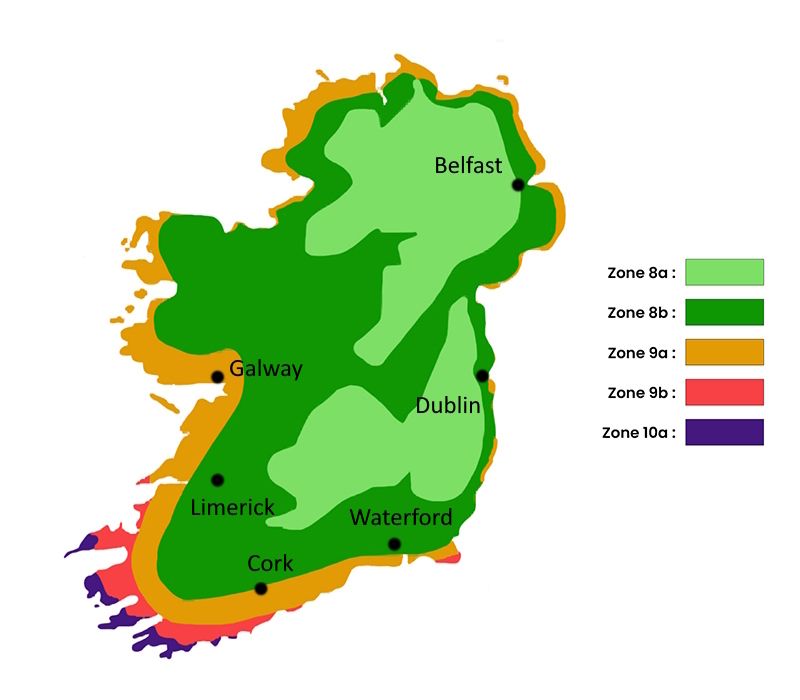
The planting period indicated on our website applies to regions in USDA Zone 9a (East Coast and Midlands: Dublin, Wexford, Waterford, Kilkenny, Portlaoise). It will vary depending on where you live:
- On the west coast and in the north-west (Galway, Limerick, Sligo, Donegal, Westport), delay planting by 1 to 2 weeks in spring and bring it forward by 1 to 2 weeks in autumn compared to the dates given, preferably choosing periods without strong winds.
- In the inland hills and plateaus (Wicklow Mountains, Macgillycuddy’s Reeks, Connemara, Killarney), it is best to plant in spring (April–May) or autumn (September–October), avoiding periods of waterlogged soil in winter and strong winds, which pose the main risk to newly planted trees in these areas.
The flowering period indicated on our website applies to regions in USDA Zone 9a, such as the East Coast and Midlands, including Dublin, Wexford, Waterford, Kilkenny and Portlaoise.
This will vary depending on where you live:
- On the west coast and in the northwest (Galway, Limerick, Sligo, Donegal and Westport), it will be delayed by one to two weeks compared to the given dates, due to stronger Atlantic winds and less spring sunshine.
- In the inland hills and plateaus (the Wicklow Mountains, the Macgillycuddy's Reeks, Connemara and Killarney), flowering will be delayed by two to three weeks. Flowering mainly occurs between May and July, with the limiting factors being less frost and more of the excessive humidity, strong winds and lack of sunshine that are characteristic of these areas.
The harvest period stated on our website applies to regions in USDA zones 8b to 9a (East, South-East and southern coast: Eastern Leinster, County Wexford and County Waterford, Cork region: Dublin, Wexford, Waterford, Kilkenny, Cork). It will vary depending on where you live:
- In the Midlands and the inland plains: the Middle Shannon Valley, Westmeath, Offaly, Longford, Cavan and Monaghan (Athlone, Mullingar, Tullamore, Longford, Cavan, Monaghan), in USDA zones 8a to 8b, the harvest will be delayed by 1 to 2 weeks compared with the dates given. Far from the moderating influence of the sea, these plains experience late frosts right up until the end of spring. The heavy, peaty soils warm slowly here, and damp patches form pockets of frost. Wait until the soil has dried out and warmed up before planting, and protect young plants with a fleece on clear nights.
- In the Atlantic West and North-West: Kerry, Clare, Galway, Connemara, Mayo, Sligo and Donegal (Killarney, Ennis, Galway, Westport, Sligo, Letterkenny), in USDA zones 8b to 10a, the harvest will be delayed by 1 to 3 weeks compared with the dates given. Summers here are cloudier, rainier and windier than in the east, which slows down ripening and encourages late blight and other fungal diseases. Kerry and Clare are at the lower end of the range, whilst Mayo and Donegal, which are cooler and more exposed, are at the upper end. However, the mild coastal winters mean that leafy vegetables and root vegetables can be harvested at dates close to those indicated, or even earlier: shelter crops from the wind with hedges and grow heat-loving plants in greenhouses or polytunnels.
- In the highlands, above 200 m: the Wicklow Mountains, Macgillycuddy’s Reeks, the Galtee and Comeragh ranges, the Twelve Bens in Connemara and the Donegal highlands, in USDA zones 7b to 8a, the harvest will be delayed by 2 to 4 weeks compared with the dates given, depending on the altitude, taking care to beat the first early frosts, which may occur as early as the start of autumn. Wind, constant damp and late frosts lasting into early summer significantly shorten the growing season. Opt for sheltered, south-facing slopes, early-maturing varieties and growing under cover.
Depending on your garden’s aspect, these variations can range from one to two weeks. A frost-prone valley floor delays the harvest, whilst a south-facing wall brings it forward.
Shipping country and language
Your country of residence may be:
Your country of residence is:
For a better user experience on our website, you can select:
Your shipping country:
-
 Austria
-
 Belgium
-
 Bosnia & Herzegovina
-
 Bulgaria
-
 Croatia
-
 Cyprus
-
 Czechia
-
 Denmark
-
 Estonia
-
 Finland
-
 France
-
 Germany
-
 Greece
-
 Hungary
-
 Iceland
-
 Ireland
-
 Italy
-
 Latvia
-
 Liechtenstein
-
 Lithuania
-
 Luxembourg
-
 Malta
-
 Netherlands
-
 Poland
-
 Portugal
-
 Romania
-
 Serbia
-
 Slovakia
-
 Slovenia
-
 Spain
-
 Sweden
-
 Switzerland
Language:
-
French
-
 English
-
Spanish
-
Italian
-
German
-
Portuguese
-
Dutch
-
Finnish
-
[pl]
My Account
Hello
My wish lists
My cart
Log in / Register
Existing customer?
This form is protected by reCAPTCHA - the Google Privacy Policy and Terms of Service apply.
New customer?
Create an account to track your orders, access our customer service and, if you wish, make the most of our upcoming offers.