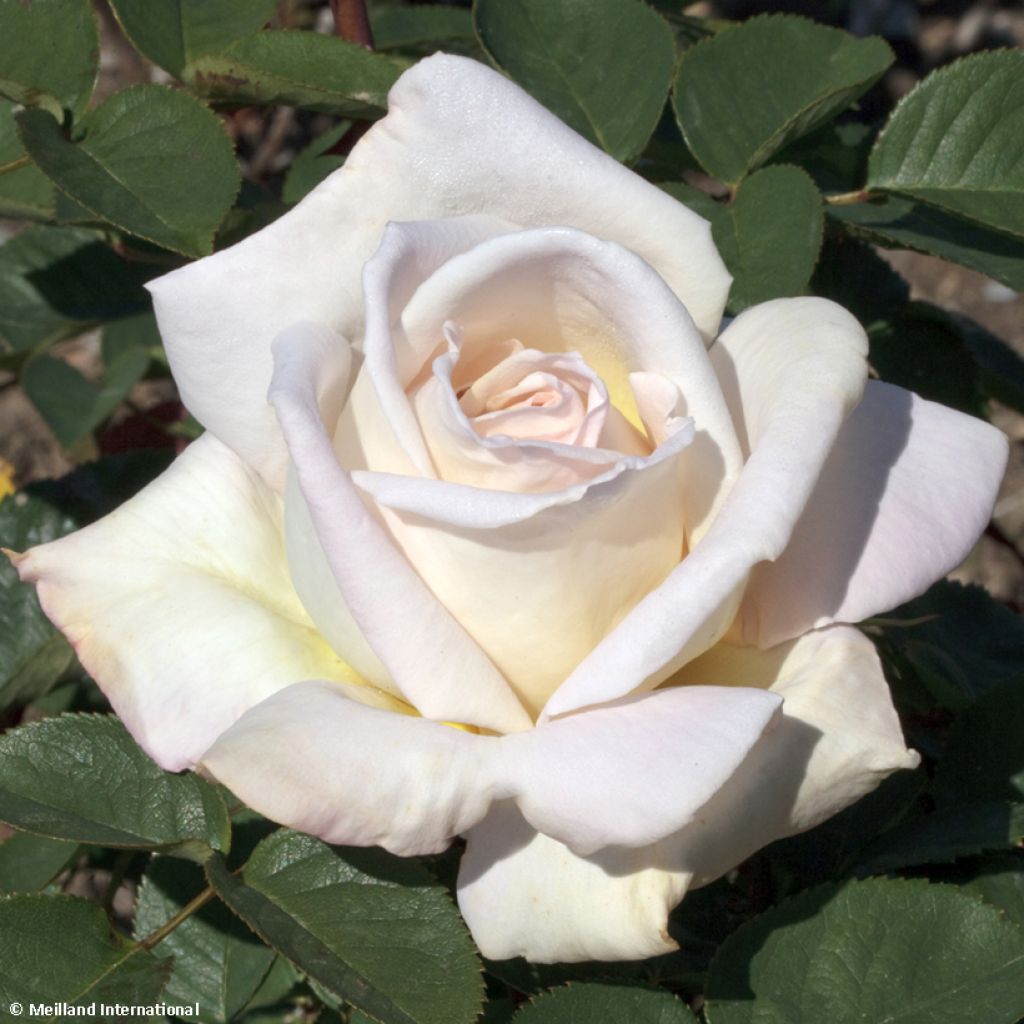
Rosa Jardins de Bagatelle
Rosa Jardins de Bagatelle
Rosa Jardins de Bagatelle 'Meimafris'
Modern Tea Rose
The bare root rose bush I received seems healthy. Planted in the ground, I'm now patiently waiting for it to take... (or not?).
Thierry, 27/01/2026
Back-to-school special offer!
Get €10 off for every €50 you spend! And get up to €40 off on a single order.
How does it work?
1. Shop your favourites
Add your favourite plants to your basket. For every €50 you spend (excluding delivery charges, store credit and the plastic-free option), you’ll receive a €10 voucher.
€50 spent = €10 voucher
€100 spent = €20 voucher
€150 spent = €30 voucher
€200 spent = €40 voucher
2. Place your order
Once your basket reaches one of the spending thresholds, place your order. You can even choose your delivery date!
3. Receive your voucher
As soon as your order has been shipped, you’ll receive an email containing your personal voucher code and its value.
4. Use it on your next order
Your voucher is valid for 90 days from the date you receive it. It can be used once only, on a new order worth at least the value of the voucher, excluding delivery charges.
Please note: Vouchers can be combined with other offers, but cannot be split or refunded.
Why not try an alternative variety in stock?
View all →
Available in 2 sizes

Available in 3 sizes

Available in 2 sizes
Available in 4 sizes
Available in 2 sizes

Available in 4 sizes
Available in 2 sizes

Available in 2 sizes
Available in 2 sizes
Available in 2 sizes
This plant carries a 6 months recovery warranty
More information
We guarantee the quality of our plants for a full growing cycle, and will replace at our expense any plant that fails to recover under normal climatic and planting conditions.


Description
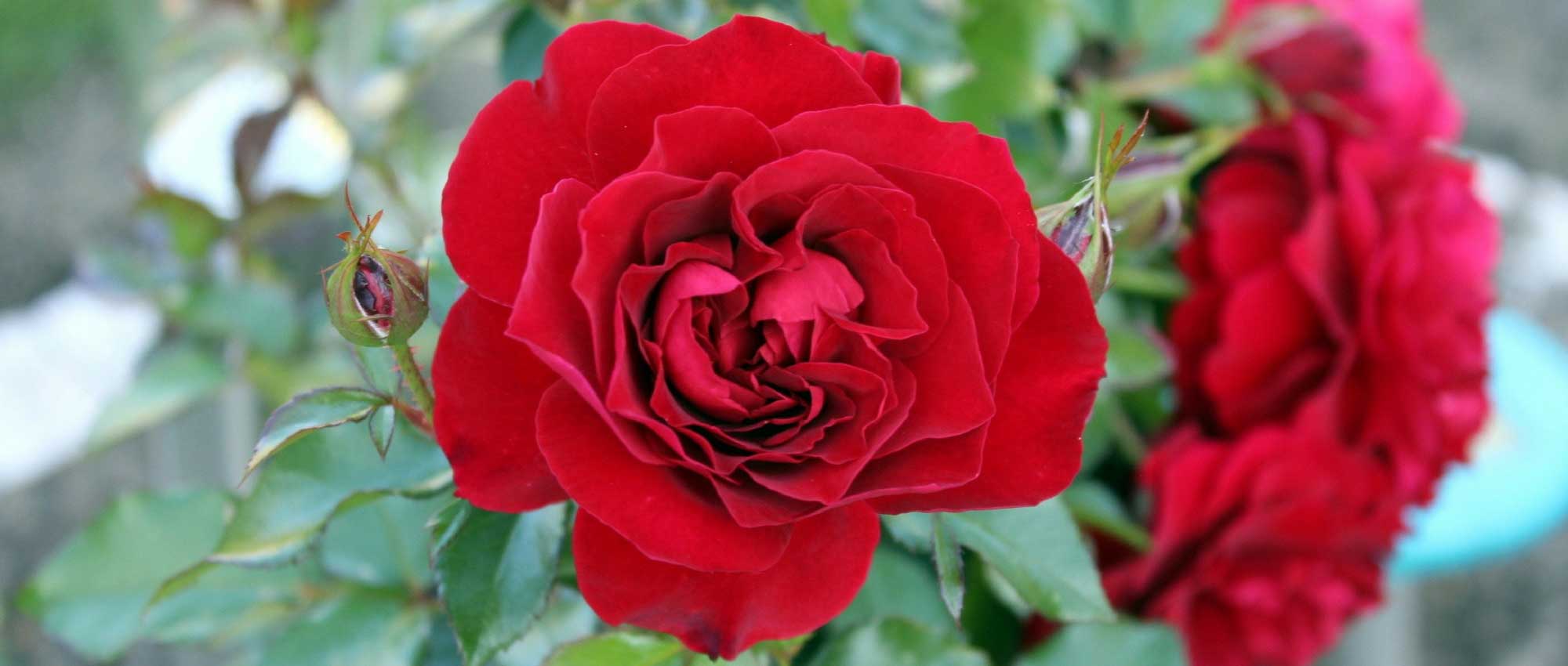
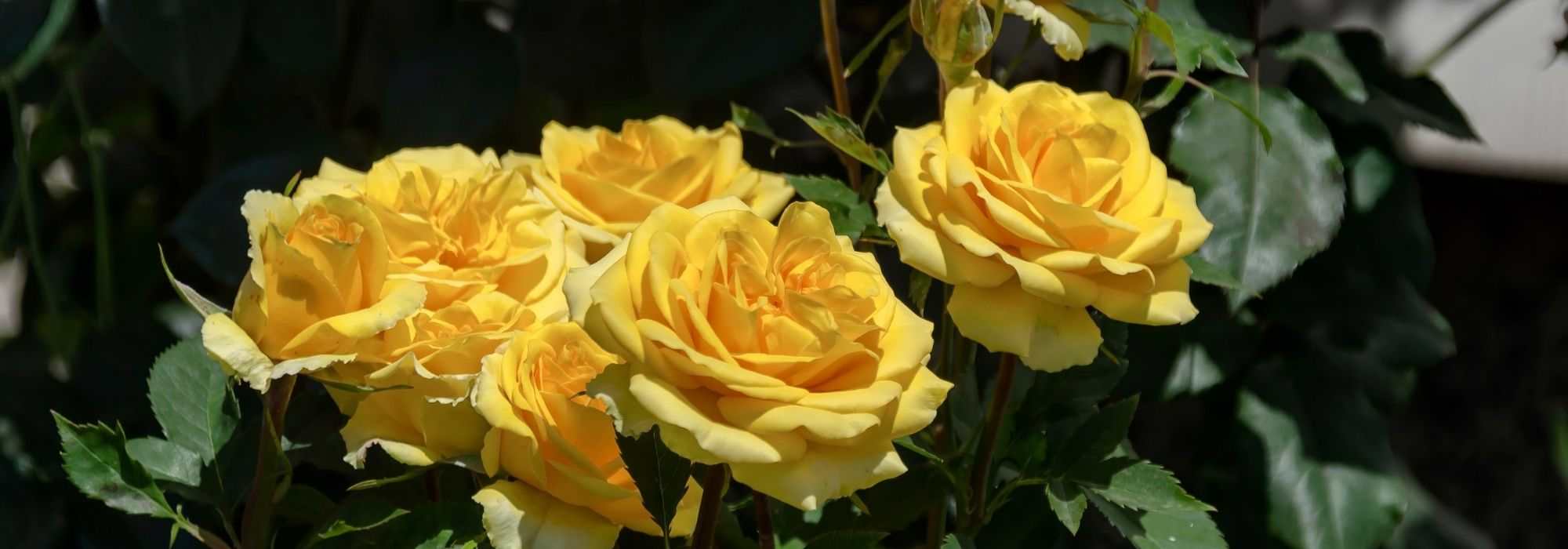
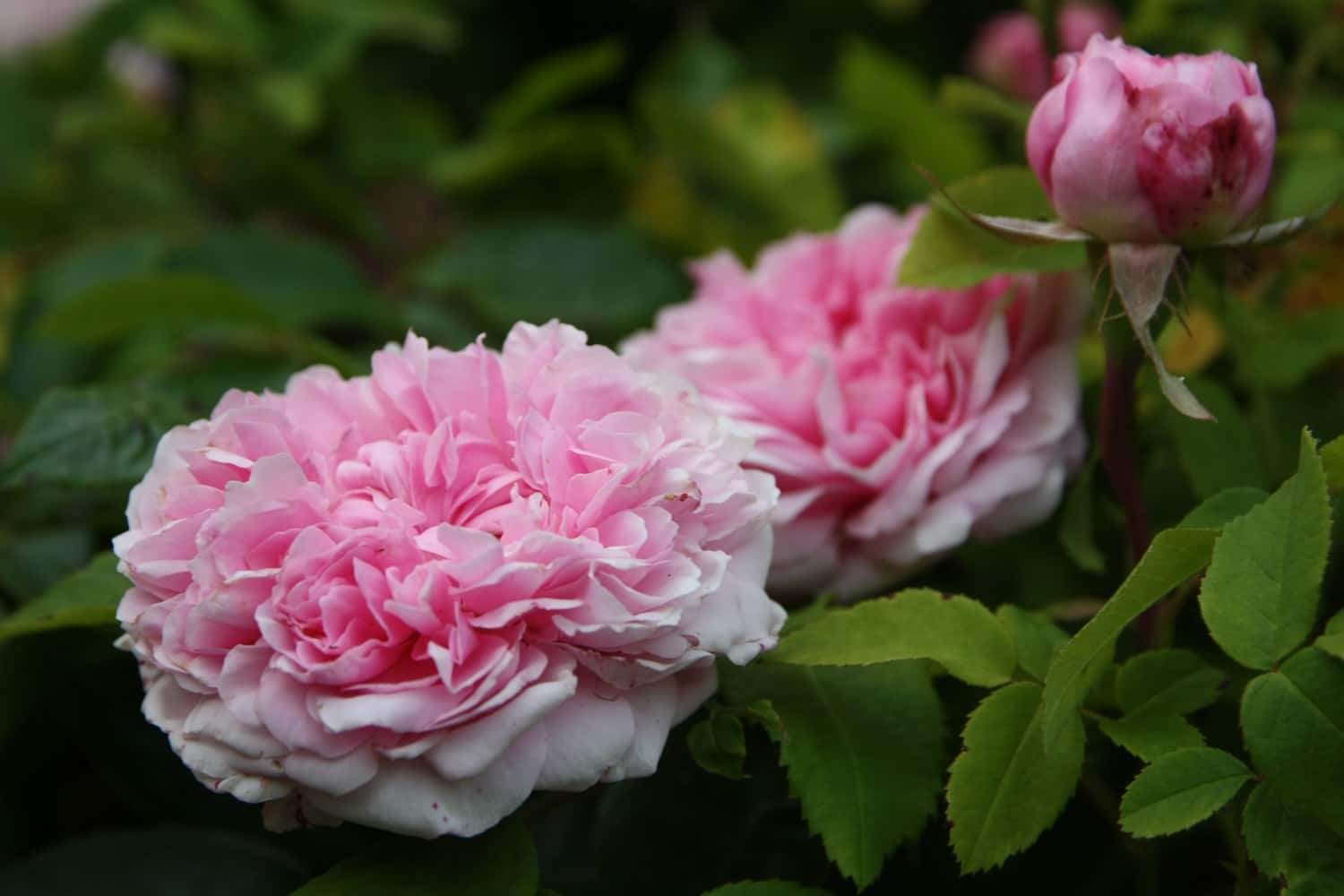
The Jardins de Bagatelle Rose is a creation by Meilland that lives up to the wonderful Parisian park to which it is dedicated. Its large roses are absolutely perfect, both in terms of their shape and their ivory hue, and they are adorned with a superb, rich, and complex fragrance. It is also a vigorous and healthy plant that blooms in successive waves from early summer to autumn. This bush offers dream roses, worthy of being featured in your most beautiful bouquets.
Jardins de Bagatelle® ('Meimafris') is a modern shrub rose related to hybrid tea roses, launched in 1986 by the Meilland house. Its numerous qualities have been recognized in international competitions, particularly its fragrance: Rose d'Or in Geneva in 1984, Perfume Cup in Paris Bagatelle in 1984, Most Fragrant Rose in Madrid in 1985, Rose d'Or and Grand Medal of the SNHF in Poitiers in 1986, and finally Gold Medal in Genoa in 1987. This vigorous bush with a rather upright habit reaches about 1m (3ft) in height and 50-60cm (20-24in) in width when mature, and its growth is rapid. It produces strong, thorny branches that bear abundant, semi-matte, dark green foliage, resistant to the main rose diseases under good growing conditions. This rose blooms in successive waves from June to October, if faded flowers are removed and the soil does not dry out too much in July-August. Its magnificently turbinate flowers, with a diameter of 12cm (5in), are composed of 65 slightly rolled petals. Their colour is a warm ivory white with a creamy centre, with the edges of the petals sometimes showing a pink shadow in cool weather. They exude an exceptional, sweet, and persistent fragrance, composed of floral notes of May Rose, fruity notes of lemon and apricot, nuanced with spices. These roses are solitary, borne at the end of long shoots from the current year or on 2-year-old stems.
This Jardins de Bagatelle rose will be planted for its flowers of rare perfection. It finds its place in a rose bed and is elegant when planted in groups of 3 in a small garden. To accompany it, consider light perennials and annuals such as the Cloud Cabbage, white paniculate phlox, or even tall foxgloves. Its almost white large roses can be paired with many colours in the garden. Pink roses will accompany it, for example 'Line Renaud' or 'Charlotte Rampling'. It also looks lovely with mauve roses ('Blue Girl', 'Charles de Gaulle', 'Claude Brasseur'...). It can be enhanced by a boxwood or yew screen, or, conversely, surrounded by a miniature hedge or a skillfully organized maze, as in Italian or French gardens. It is also, above all, a sumptuous cut flower with a superb fragrance.
Plant habit
Flowering
Foliage
Planting and care
Plant your Jardins de Bagatelle Rose bush in a sunny or lightly shaded location. Modern roses are tolerant, but they do not appreciate excess limestone. They will adapt to any garden as long as the soil is well worked, not too heavy, and rich enough. To install your rose bush, work the soil by crumbling it and put an amendment, such as dried blood or dehydrated horn, at the bottom of the planting hole. Water generously after planting to remove air pockets. Water regularly for a few weeks to facilitate rooting.
Pruning modern perpetual roses is essential for flowering. It is done in three steps:
1. Maintenance pruning: regularly shorten the branches that have bloomed during the season. To promote the reblooming of perpetual roses, remove faded flowers at the same time as their stem, leaving 2 or 3 leaves.
2. Preparatory pruning in autumn: light pruning that anticipates the main spring pruning. It is not recommended in regions with cold winters to avoid weakening the bush.
3. Spring pruning: in February-March, when the buds have become shoots 2 to 3cm (1in) long, trim the young strong branches by a quarter of their length.
Pruning always aims to clear the centre of the bush and remove dead wood, diseased branches, and weak shoots. The most vigorous ones will be kept, generally 3 to 6 well-positioned branches to maintain a beautiful habit. Always prune at a slant about ½ cm or 1cm above a bud facing outward.
Roses are often stained or unsightly at the end of summer, but it is not a problem for their development. These stains are not harmful to the rose bush, it is a natural phenomenon.
Planting period
Intended location
Care
Planting & care advice
-
-

-

-

-
-

-
-

-
, onOrder confirmed
Reply from on Promesse de fleurs
Recently viewed products
Haven't found what you were looking for?
Hardiness is the lowest winter temperature a plant can endure without suffering serious damage or even dying. However, hardiness is affected by location (a sheltered area, such as a patio), protection (winter cover) and soil type (hardiness is improved by well-drained soil).
In temperate climates, pruning of spring-flowering shrubs (forsythia, spireas, etc.) should be done just after flowering.
Pruning of summer-flowering shrubs (Indian Lilac, Perovskia, etc.) can be done in winter or spring.
In cold regions as well as with frost-sensitive plants, avoid pruning too early when severe frosts may still occur.
The harvesting period indicated on our website applies to countries and regions in USDA zone 8 (France, England, Ireland, the Netherlands).
In colder areas (Scandinavia, Poland, Austria...) fruit and vegetable harvests are likely to be delayed by 3-4 weeks.
In warmer areas (Italy, Spain, Greece, etc.), harvesting will probably take place earlier, depending on weather conditions.
The sowing periods indicated on our website apply to countries and regions within USDA Zone 8 (France, UK, Ireland, Netherlands).
In colder areas (Scandinavia, Poland, Austria...), delay any outdoor sowing by 3-4 weeks, or sow under glass.
In warmer climes (Italy, Spain, Greece, etc.), bring outdoor sowing forward by a few weeks.
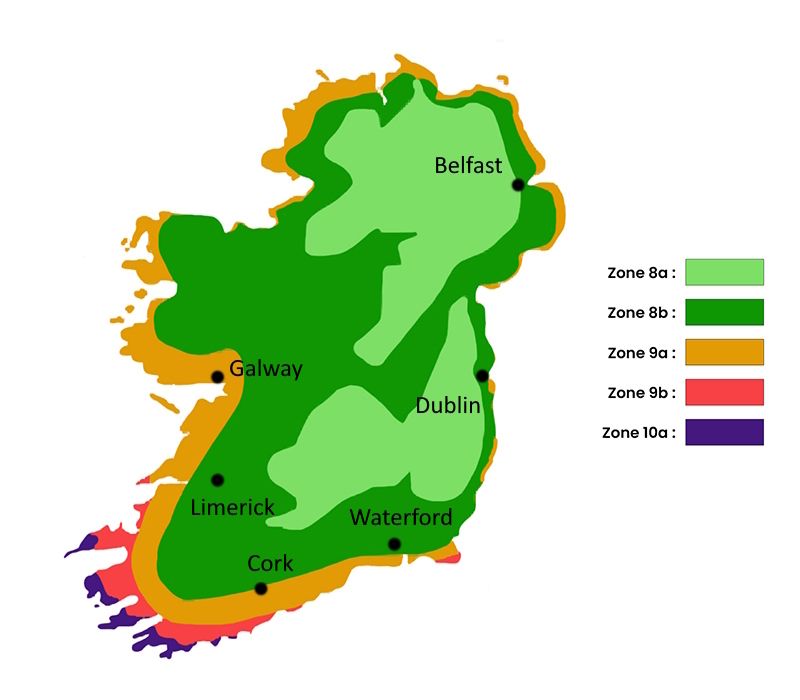
The planting period indicated on our website applies to regions in USDA Zone 9a (East Coast and Midlands: Dublin, Wexford, Waterford, Kilkenny, Portlaoise). It will vary depending on where you live:
- On the west coast and in the north-west (Galway, Limerick, Sligo, Donegal, Westport), delay planting by 1 to 2 weeks in spring and bring it forward by 1 to 2 weeks in autumn compared to the dates given, preferably choosing periods without strong winds.
- In the inland hills and plateaus (Wicklow Mountains, Macgillycuddy’s Reeks, Connemara, Killarney), it is best to plant in spring (April–May) or autumn (September–October), avoiding periods of waterlogged soil in winter and strong winds, which pose the main risk to newly planted trees in these areas.
The flowering period indicated on our website applies to regions in USDA Zone 9a, such as the East Coast and Midlands, including Dublin, Wexford, Waterford, Kilkenny and Portlaoise.
This will vary depending on where you live:
- On the west coast and in the northwest (Galway, Limerick, Sligo, Donegal and Westport), it will be delayed by one to two weeks compared to the given dates, due to stronger Atlantic winds and less spring sunshine.
- In the inland hills and plateaus (the Wicklow Mountains, the Macgillycuddy's Reeks, Connemara and Killarney), flowering will be delayed by two to three weeks. Flowering mainly occurs between May and July, with the limiting factors being less frost and more of the excessive humidity, strong winds and lack of sunshine that are characteristic of these areas.
Shipping country and language
Your country of residence may be:
Your country of residence is:
For a better user experience on our website, you can select:
Your shipping country:
-
 Austria
-
 Belgium
-
 Bosnia & Herzegovina
-
 Bulgaria
-
 Croatia
-
 Cyprus
-
 Czechia
-
 Denmark
-
 Estonia
-
 Finland
-
 France
-
 Germany
-
 Greece
-
 Hungary
-
 Iceland
-
 Ireland
-
 Italy
Italy
-
 Latvia
-
 Liechtenstein
-
 Lithuania
-
 Luxembourg
-
 Malta
Malta
-
 Netherlands
-
 Poland
-
 Portugal
-
 Romania
-
 Serbia
-
 Slovakia
-
 Slovenia
-
 Spain
Spain
-
 Sweden
-
 Switzerland
Language:
-
French
-
 English
-
Spanish
-
Italian
-
German
-
Portuguese
-
Dutch
-
Finnish
My Account
Hello
My wish lists
My cart
Log in / Register
Existing customer?
This form is protected by reCAPTCHA - the Google Privacy Policy and Terms of Service apply.
New customer?
Create an account to track your orders, access our customer service and, if you wish, make the most of our upcoming offers.