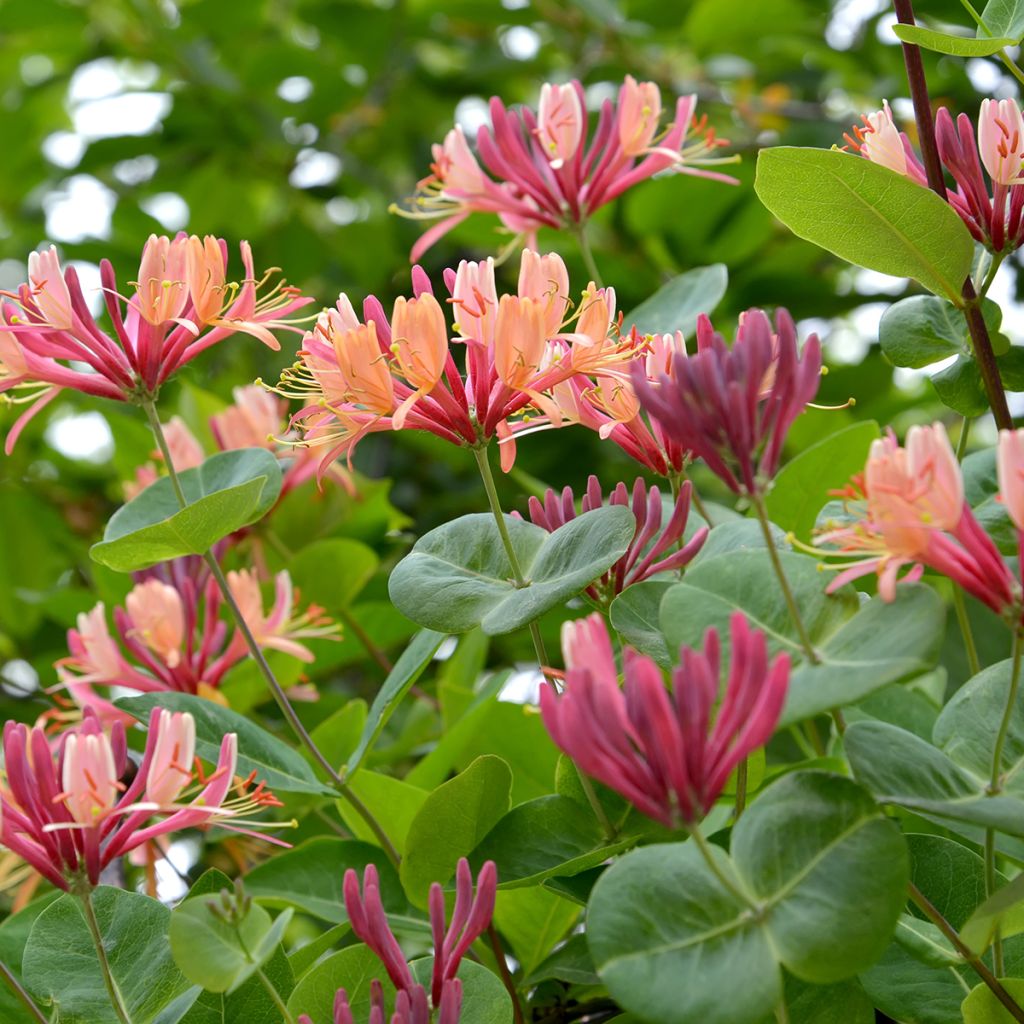
Lonicera x heckrottii
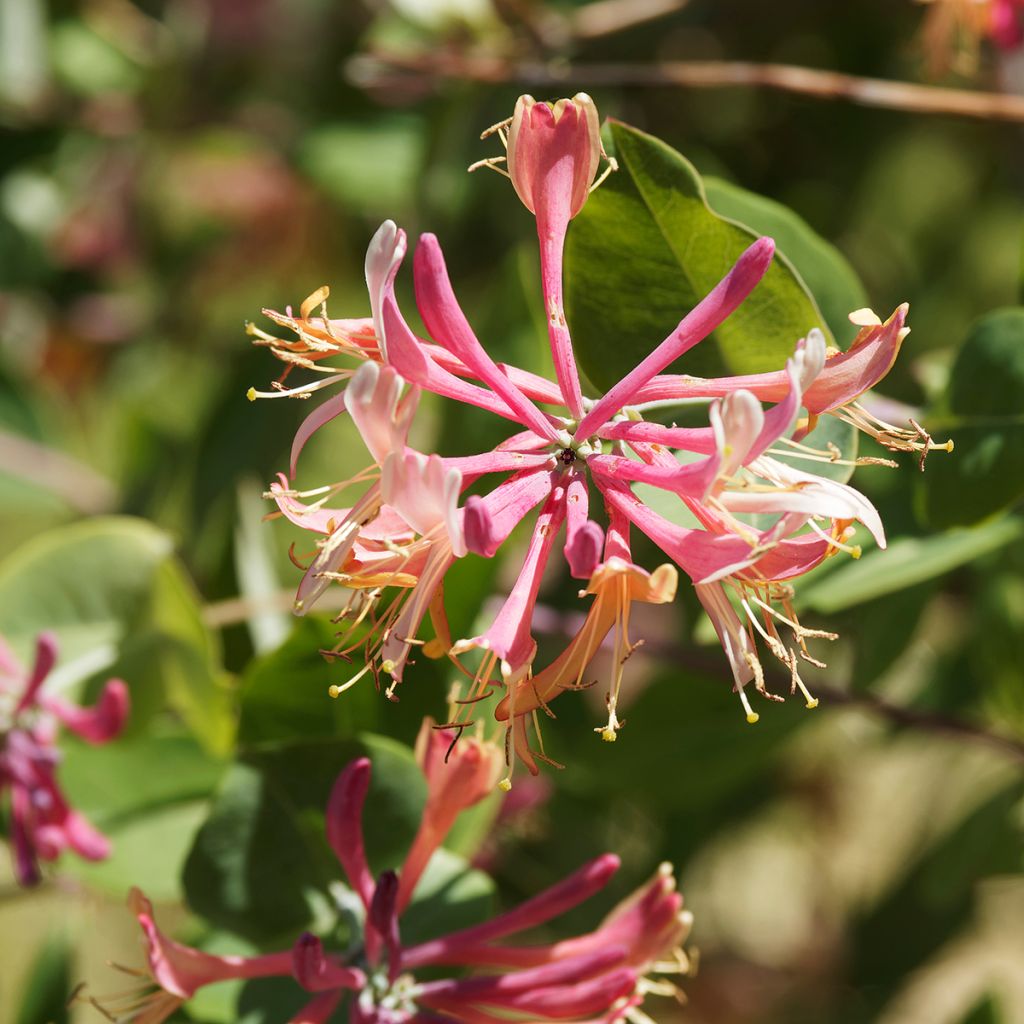
Lonicera x heckrottii
Lonicera x heckrottii
Lonicera x heckrottii
Golden Trumpet Honeysuckle, Pink Lemonade Honeysuckle, Everblooming Honeysuckle
Bought in autumn, it has come back spectacularly this spring! Fast growth, lovely green and vigorous leaves. I’m now waiting for it to flower...!
Nelly, 13/05/2025
Back-to-school special offer!
Get €10 off for every €50 you spend! And get up to €40 off on a single order.
How does it work?
1. Shop your favourites
Add your favourite plants to your basket. For every €50 you spend (excluding delivery charges, store credit and the plastic-free option), you’ll receive a €10 voucher.
€50 spent = €10 voucher
€100 spent = €20 voucher
€150 spent = €30 voucher
€200 spent = €40 voucher
2. Place your order
Once your basket reaches one of the spending thresholds, place your order. You can even choose your delivery date!
3. Receive your voucher
As soon as your order has been shipped, you’ll receive an email containing your personal voucher code and its value.
4. Use it on your next order
Your voucher is valid for 90 days from the date you receive it. It can be used once only, on a new order worth at least the value of the voucher, excluding delivery charges.
Please note: Vouchers can be combined with other offers, but cannot be split or refunded.
Why not try an alternative variety in stock?
View all →
Available in 2 sizes
Available in 2 sizes
Available in 2 sizes
Available in 1 sizes
Available in 1 sizes
Available in 1 sizes
Available in 1 sizes
Available in 1 sizes
Available in 1 sizes
Available in 1 sizes
This plant carries a 12 months recovery warranty
More information
We guarantee the quality of our plants for a full growing cycle, and will replace at our expense any plant that fails to recover under normal climatic and planting conditions.

Does this plant fit my garden?
Set up your Plantfit profile →
Description
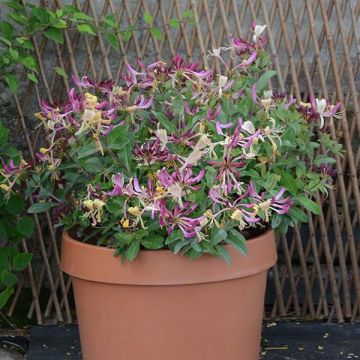
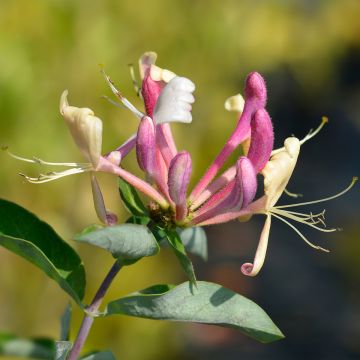
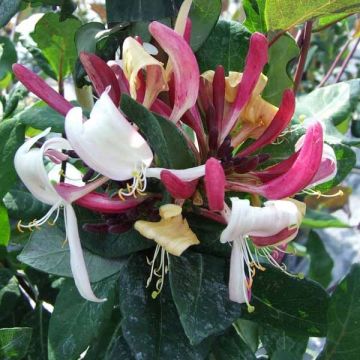
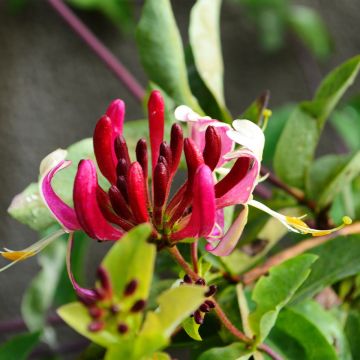
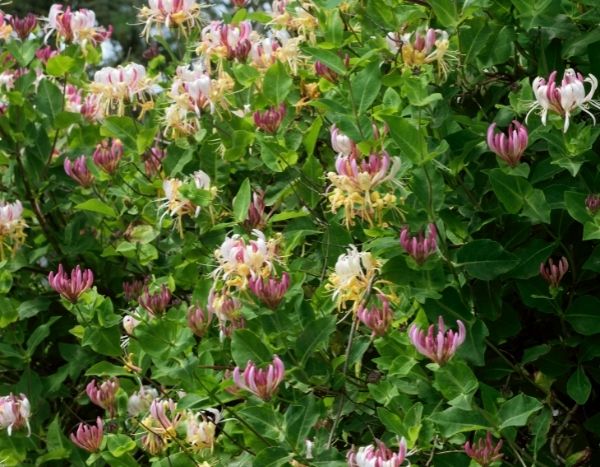
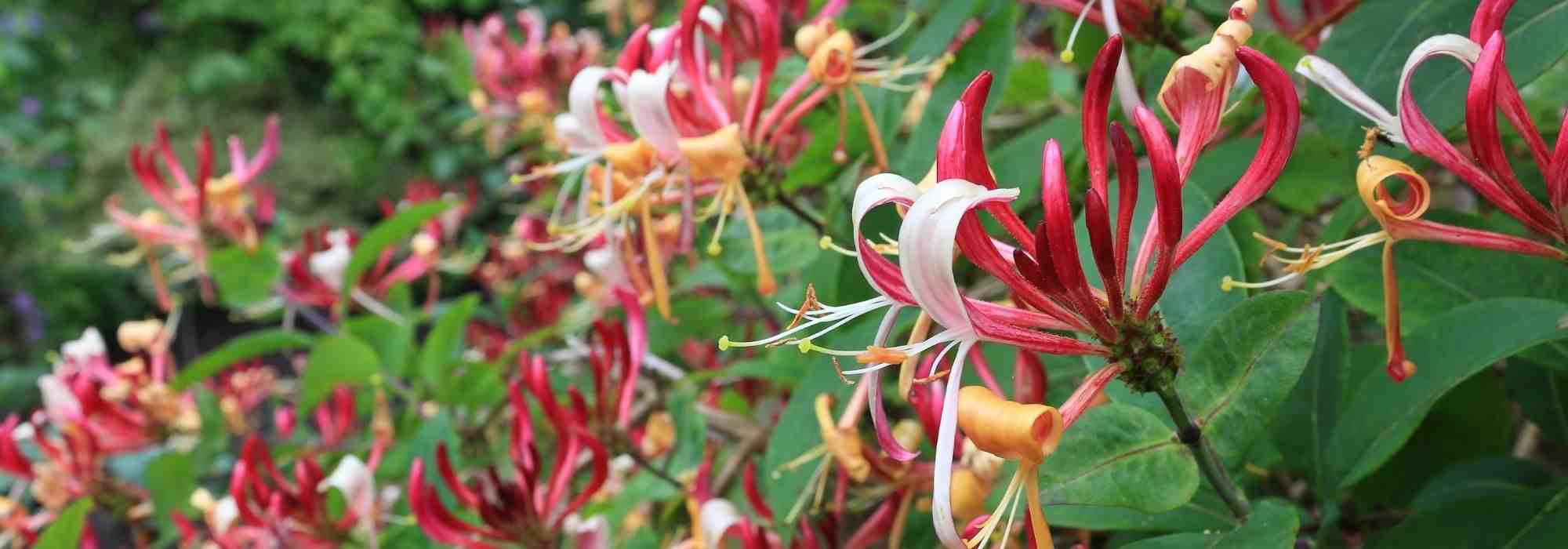
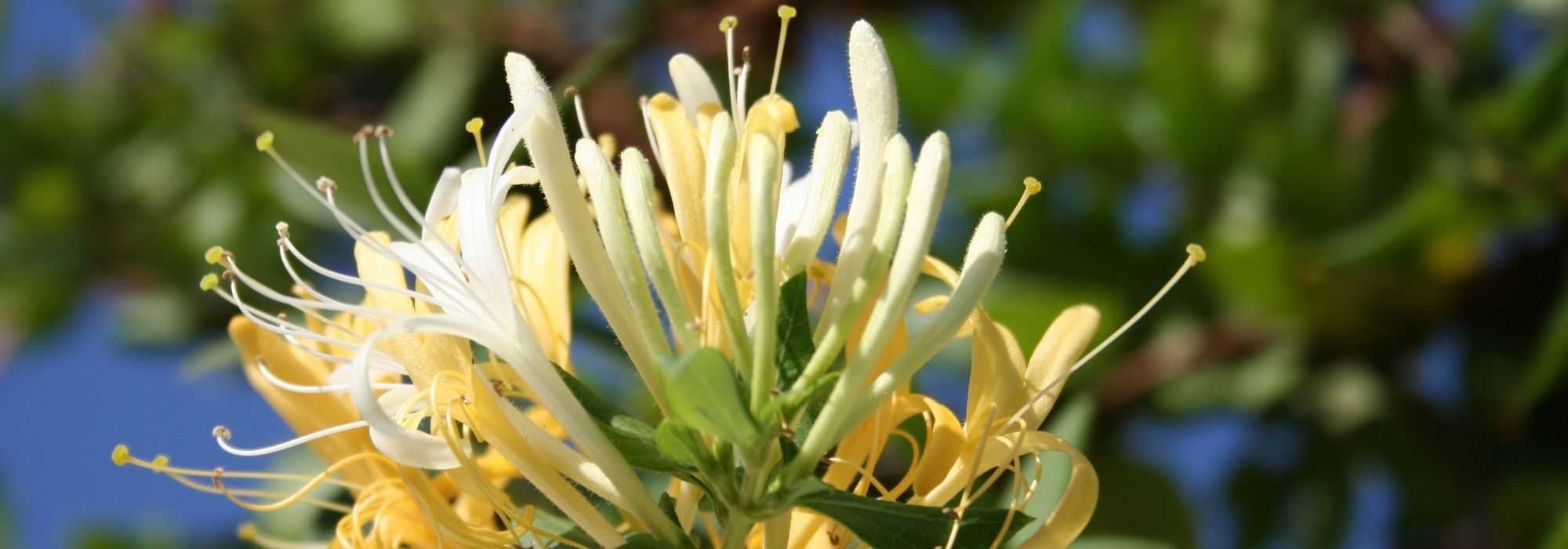
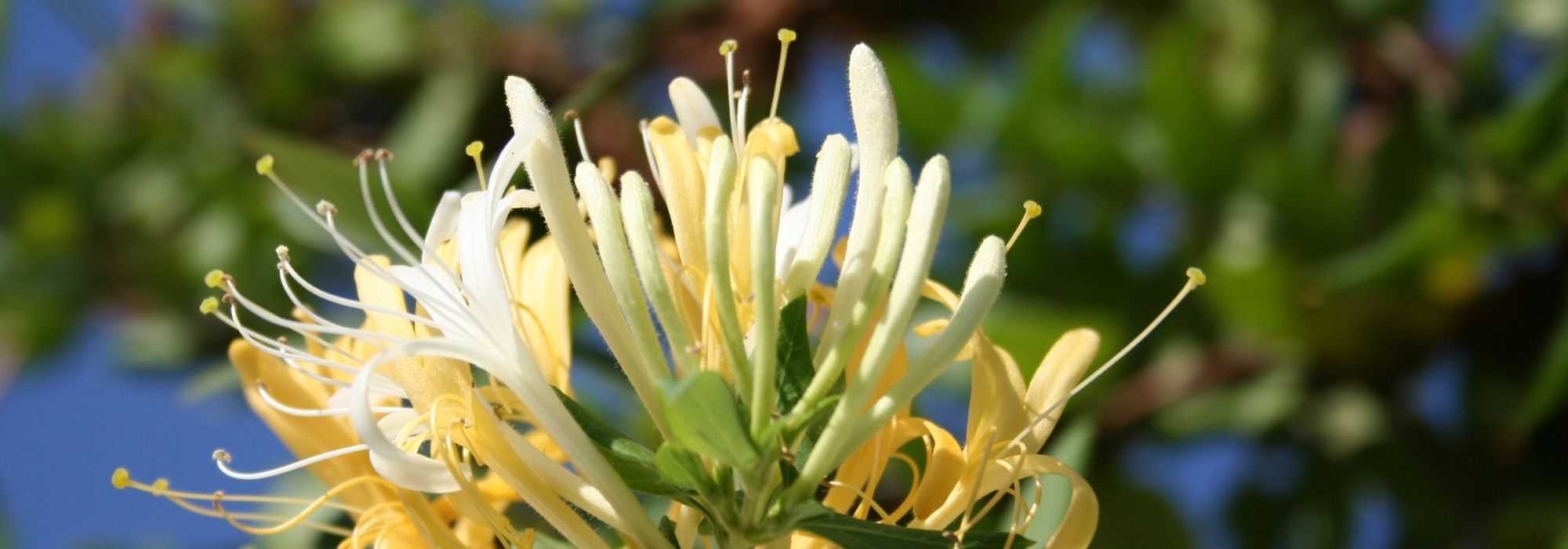
Lonicera x heckrotii is a particularly floriferous, well-coloured, and fragrant hybrid Honeysuckle, vigorous but with moderate dimensions, which allows it to be integrated into a small-sized garden or grown in a large pot on the terrace. It is seductive with its strongly scented and spicy summer flowering. Its flowers, very numerous, mix tones of pink, red, yellow, and cream, and succeed each other during a very long period, on a beautiful green-blue foliage that persists more or less in winter depending on the climate. This variety is also very ornamental when grown as a bush, in a hedge, or in a country flowerbed.
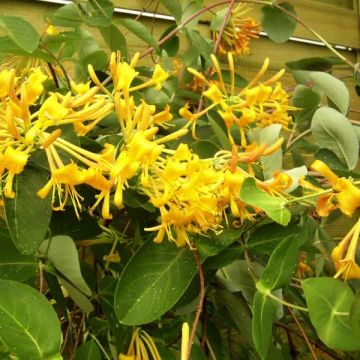
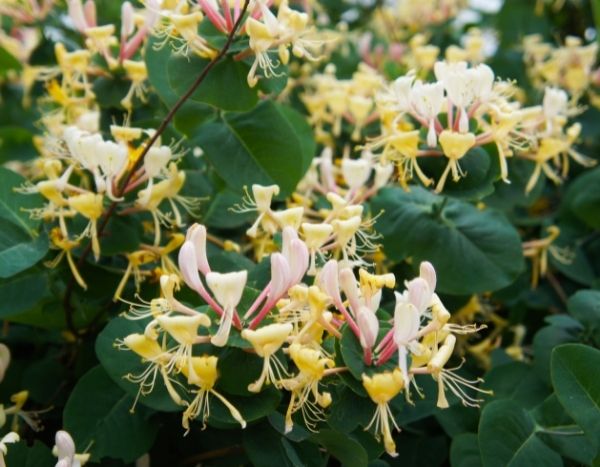
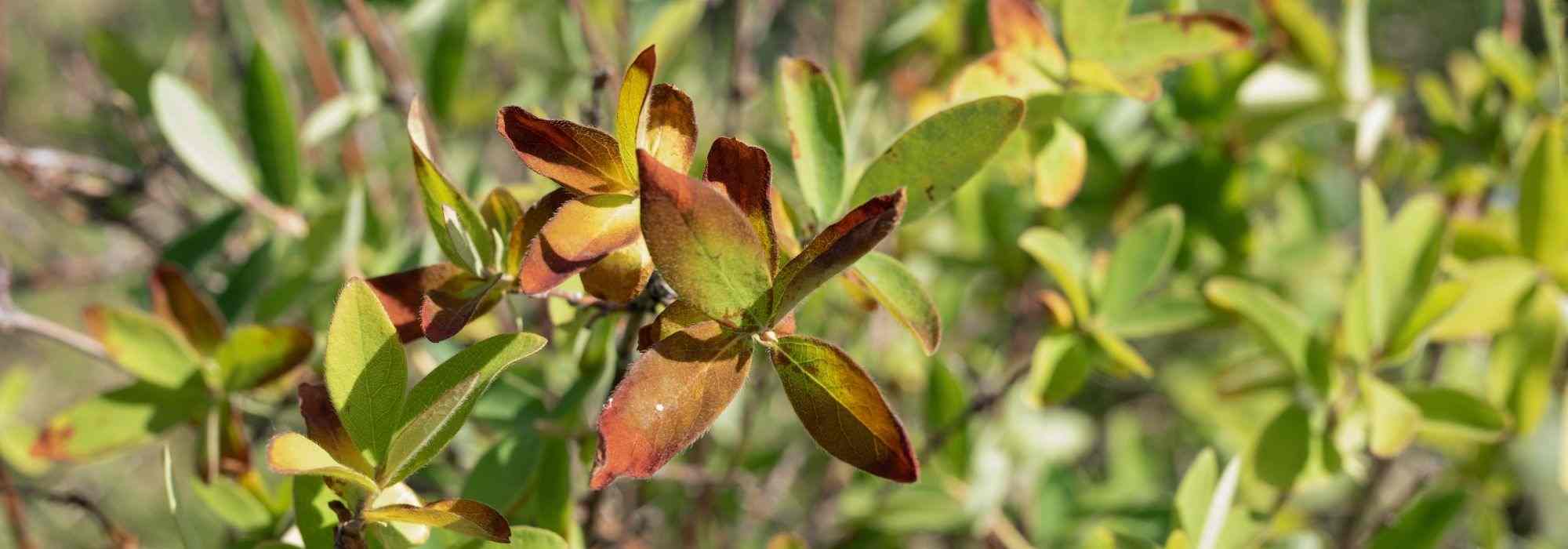
Lonicera x heckrotii is a horticultural hybrid resulting from the cross-breeding of L. sempervirens and L. americana (L. caprifolium × L. etrusca) carried out in the U.S.A before 1900. It is sometimes assimilated to the cultivars 'American Beauty' and 'Gold Flame', to which it bears a strong resemblance. All these plants belong to the Caprifoliaceae family. It is a deciduous to evergreen variety, with a bushy to climbing habit depending on the severity of the winter. The mature plant will reach approximately 4m (13ft) in height and 2.50m (8ft) in width. The flowering, particularly generous from June-July to September, takes place at the end of the young shoots, throughout the growth period. The tubular flowers, 4cm (2in) long, of a deep carmine red, open onto two lips of a very bright yellow, exhaling a powerful fragrance. Over time, they turn pink with a cream throat. They are gathered in dense whorls in the axils of the leaves. After pollination by bees and certain nocturnal butterflies, they produce small red berries that are toxic to humans but sought after by some birds. The young voluble branches are more or less reddish, adding a touch of colour to this lovely honeysuckle. The foliage consists of ovate leaves, 5cm (2in) long, taking on a pretty green-blue hue when ripe.
Lonicera x heckrotii can be trained to climb on a trellis, wire mesh, or espalier, especially on a pergola located on a patio, a terrace, or near the house where its fragrant flowering will be greatly appreciated. Alternatively, according to one's desires and tastes, it can be placed on a fence or above a stone wall where it will gracefully cascade. When grown as a bush, it will enhance a flowerbed near the house or the foreground of a flowering hedge, the edge of a grove... There is no shortage of ideas for associations with clematis plants: for example, it can be paired with small clematis plants like Clematis patens 'Shin-Shigyoku', 'Prince Charles', winter jasmine (Jasminum nudiflorum), perennial peas (Lathyrus latifolius 'Red Pearl'), a small climbing rose 'Laguna', bright pink...
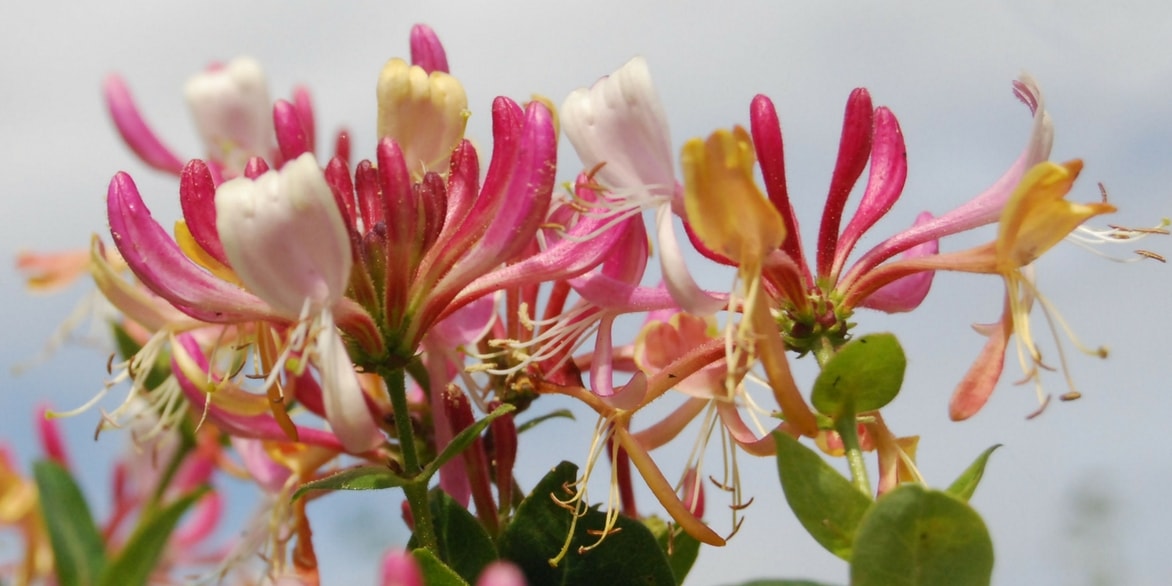
Lonicera x heckrottii in pictures
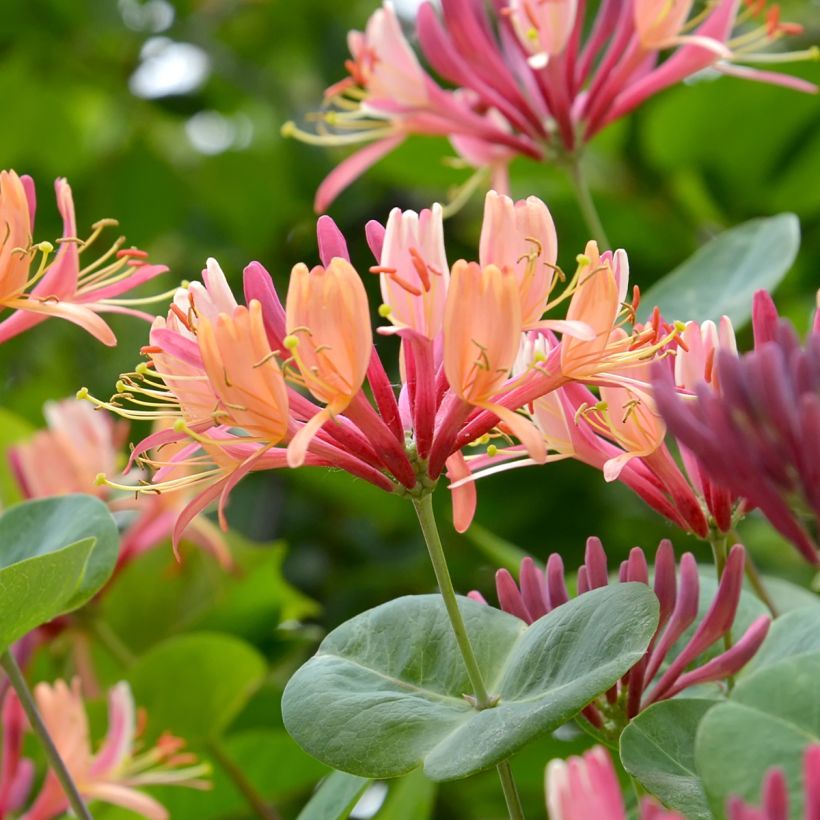
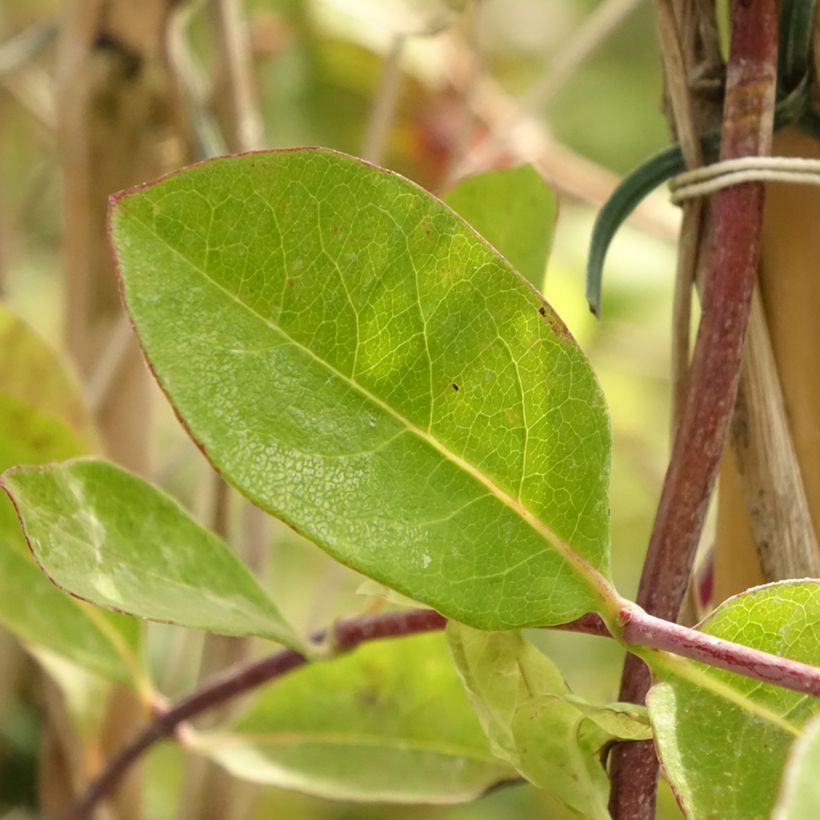
Plant habit
Flowering
Foliage
Botanical data
Lonicera
x heckrottii
Caprifoliaceae
Golden Trumpet Honeysuckle, Pink Lemonade Honeysuckle, Everblooming Honeysuckle
Cultivar or hybrid
Planting and care
Honeysuckles thrive in any good loose garden soil, which is slightly or not at all calcareous on the surface, rich in humus, with the base shaded and the head in the sun. Practice a pruning each year for cleaning. However, it is possible to severely cut back an old subject to completely renew its structure. This restoration should be done over one or two years. Honeysuckles are hardy climbing plants ideal for quickly dressing a wall or arbor. Provide them with support, they will cling on their own. We love them for their long flowering period and wonderful fragrance.
Our advice: Plant it near your terrace to fully enjoy its intoxicating fragrance, which intensifies in the morning and evening. Their enemies are aphids, which can be eliminated with pyrethrin, as well as powdery mildew. To limit the risk of disease, it is useful to properly ventilate the branches of the honeysuckle and place it in an open location. Preventive or curative treatments with Bordeaux mixture are effective.
Planting period
Intended location
Care
Planting & care advice
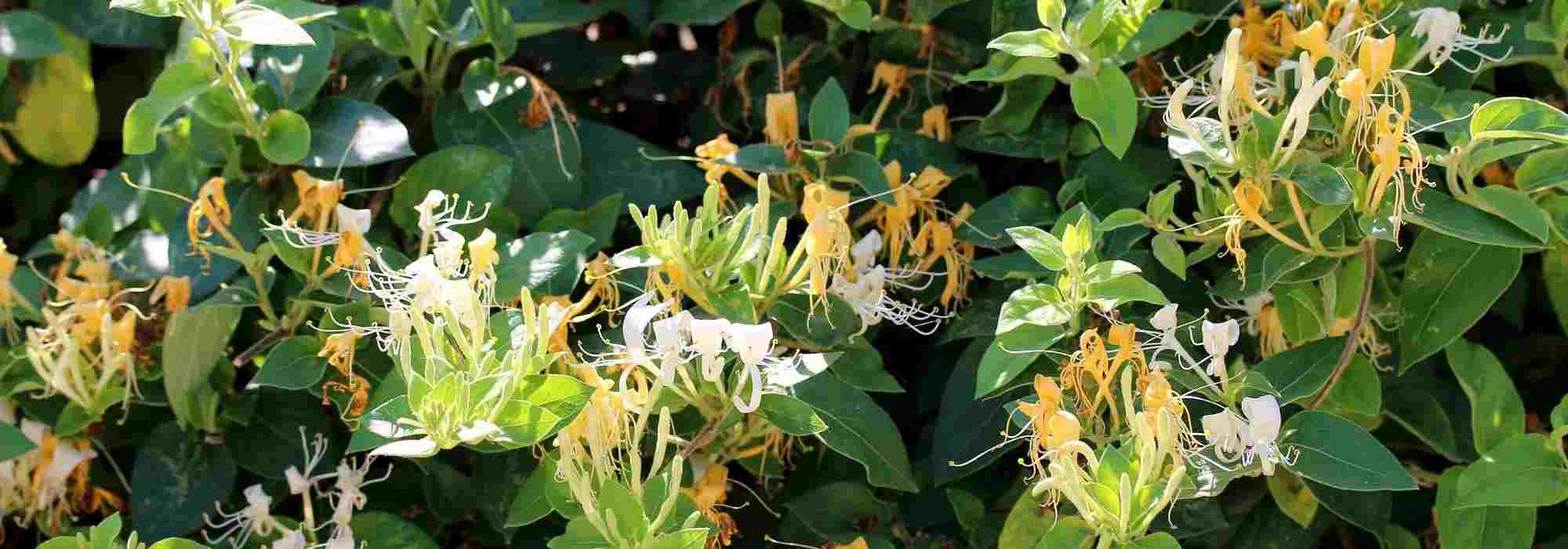

-
, onOrder confirmed
Reply from on Promesse de fleurs
Recently viewed products
Haven't found what you were looking for?
Hardiness is the lowest winter temperature a plant can endure without suffering serious damage or even dying. However, hardiness is affected by location (a sheltered area, such as a patio), protection (winter cover) and soil type (hardiness is improved by well-drained soil).
In temperate climates, pruning of spring-flowering shrubs (forsythia, spireas, etc.) should be done just after flowering.
Pruning of summer-flowering shrubs (Indian Lilac, Perovskia, etc.) can be done in winter or spring.
In cold regions as well as with frost-sensitive plants, avoid pruning too early when severe frosts may still occur.
The harvesting period indicated on our website applies to countries and regions in USDA zone 8 (France, England, Ireland, the Netherlands).
In colder areas (Scandinavia, Poland, Austria...) fruit and vegetable harvests are likely to be delayed by 3-4 weeks.
In warmer areas (Italy, Spain, Greece, etc.), harvesting will probably take place earlier, depending on weather conditions.
The sowing periods indicated on our website apply to countries and regions within USDA Zone 8 (France, UK, Ireland, Netherlands).
In colder areas (Scandinavia, Poland, Austria...), delay any outdoor sowing by 3-4 weeks, or sow under glass.
In warmer climes (Italy, Spain, Greece, etc.), bring outdoor sowing forward by a few weeks.
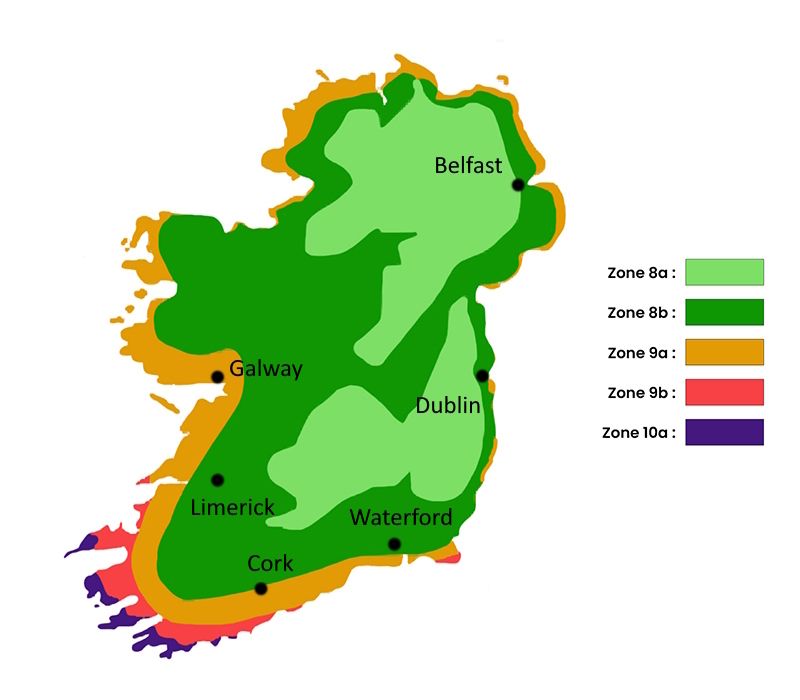
The planting period indicated on our website applies to regions in USDA Zone 9a (East Coast and Midlands: Dublin, Wexford, Waterford, Kilkenny, Portlaoise). It will vary depending on where you live:
- On the west coast and in the north-west (Galway, Limerick, Sligo, Donegal, Westport), delay planting by 1 to 2 weeks in spring and bring it forward by 1 to 2 weeks in autumn compared to the dates given, preferably choosing periods without strong winds.
- In the inland hills and plateaus (Wicklow Mountains, Macgillycuddy’s Reeks, Connemara, Killarney), it is best to plant in spring (April–May) or autumn (September–October), avoiding periods of waterlogged soil in winter and strong winds, which pose the main risk to newly planted trees in these areas.
The flowering period indicated on our website applies to regions in USDA Zone 9a, such as the East Coast and Midlands, including Dublin, Wexford, Waterford, Kilkenny and Portlaoise.
This will vary depending on where you live:
- On the west coast and in the northwest (Galway, Limerick, Sligo, Donegal and Westport), it will be delayed by one to two weeks compared to the given dates, due to stronger Atlantic winds and less spring sunshine.
- In the inland hills and plateaus (the Wicklow Mountains, the Macgillycuddy's Reeks, Connemara and Killarney), flowering will be delayed by two to three weeks. Flowering mainly occurs between May and July, with the limiting factors being less frost and more of the excessive humidity, strong winds and lack of sunshine that are characteristic of these areas.
Shipping country and language
Your country of residence may be:
Your country of residence is:
For a better user experience on our website, you can select:
Your shipping country:
-
 Austria
-
 Belgium
-
 Bosnia & Herzegovina
-
 Bulgaria
-
 Croatia
-
 Cyprus
-
 Czechia
-
 Denmark
-
 Estonia
-
 Finland
-
 France
-
 Germany
-
 Greece
-
 Hungary
-
 Iceland
-
 Ireland
-
 Italy
Italy
-
 Latvia
-
 Liechtenstein
-
 Lithuania
-
 Luxembourg
-
 Malta
Malta
-
 Netherlands
-
 Poland
-
 Portugal
-
 Romania
-
 Serbia
-
 Slovakia
-
 Slovenia
-
 Spain
Spain
-
 Sweden
-
 Switzerland
Language:
-
French
-
 English
-
Spanish
-
Italian
-
German
-
Portuguese
-
Dutch
-
Finnish
My Account
Hello
My wish lists
My cart
Log in / Register
Existing customer?
This form is protected by reCAPTCHA - the Google Privacy Policy and Terms of Service apply.
New customer?
Create an account to track your orders, access our customer service and, if you wish, make the most of our upcoming offers.